TRADITIONAL MARTIAL ARTS

TRADITIONAL MARTIAL ARTS

Monday, October 13, 2025

HAS IT ALL CHANGED?

 By Phillip Starr

How many times have I heard, “That traditional stuff doesn't work in a real street fight!” And all the blather about “reality based” methods, as opposed, I guess, to the methods different from theirs which, I guess, are based on “unreality?” Oddly enough, I've never heard one of these alleged combat authorities explain just WHY they don't work, or if they ever did, just exactly WHEN did they become obsolete...? As nearly as I can determine, many of the critics of the “traditional stuff” believe there was a time in the hazy past when the bad guys fought with perfect reverse punches and side kicks, and the good guys defended themselves with textbook blocks and counter-attacks. These “reality critics” must believe that the “street fight situations” of the past looked much like a modern karate class. When was this?

If we follow the logic of the aforementioned critics, we must suppose that around the mid-1970's (when “full-contact fighting” came into vogue), someone woke up and realized that “real fighting” involved things like head butting, gouging, and multiple attacks. Wow...! How brilliant of these innovators to have discovered this hidden truth and to set out to rectify matters.

It is typical of many people (especially nowadays) – mostly those of adolescent mentality – to believe that nothing really important has happened unless it has been in their lifetimes. Apparently, they believe that until the advent of grappling (using the worn-out adage that “all fights go to the ground”), contact-type combative SPORT fighting arts consisted of dorks attired in pajamas throwing jerky punches and kicks and, of course, “judo chops” at each other. And we'd have to conclude that all these “traditionalists” were either involved in a massive cult-like deception or that the bad guys of the past were just really, really stupid and easily defeated by such methods.

The truth is that people engaged in hand-to-hand fighting – whether on a battlefield or a tavern – tend to go about it in the same way that they always have. Physiologically, we haven't changed much in a rather long time. It's true that culture plays a role in how we fight; I remember when I was a youngster, anyone who kicked in a fight was a “sissy” and striking to the groin was unthinkable (I even saw a WWI hand-to-hand manual that instructed soldiers that such a vicious tactic was to be used only when one's life was at stake!). Nowadays, everyone from citizens to criminals and even police officers are apt to kick an opponent. A schoolboy in old England could expect his foe to accept defeat if his nose was bloodied. City gangs of the 1950's often had elaborate rituals of approaching each other, stalking, and even posturing. Nowadays, such rituals have vanished and business often starts with a drive-by spray of gunfire. Although gang members are often criminals, they aren't stupid (for the most part); they adapted their behavior to meet a change in combat.

But these are actually secondary considerations in most cases; when it comes down to people engaged in personal combat hand-to-hand, we haven't suddenly discovered anything new. This is why it's silly to speak of “traditional” ways of fighting. Rather than comparing “traditional” and “reality” disciplines, it's more appropriate to think of distinctions in APPROACHES to learning to fight. Certainly, there are superior and inferior ways of teaching and learning this skill. The karate/taekwondo/gong-fu school where forms are perceived as a rote exercise, performed robotically and always against an imaginary assailant is NOT engaging in traditional training. More accurately, it is engaged in inferior training, probably led by someone who never learned correctly in the first place and is now passing down his bad habits and training methods to his pupils. The grappling school wherein students immediately go to the mat and students are taught in a haphazard way that doesn't teach fundamentals, always hoping to “find what works” in the heat of the action, isn't really doing anything new or revolutionary. It's just poor training, like tossing someone out of a boat to teach them how to swim.

Oftentimes, what passes for traditional training - even in Japan and China – is no more than a stylized pantomime in too many schools/groups. Just because my gong-fu, karate, or judo doesn't work is no indication that these arts are unrealistic. If I'm doing some diluted form, it's my APPROACH to them that's unrealistic. To believe otherwise is to embrace the crooked logic that these ancient arts have been an enormous fraud; to believe that judo has been little more than 150 year-old delusion. It worked in the past. If it doesn't work now, it isn't because people have learned to fight differently. It's more likely that you're simply not doing it right.

Nearly all the problems we have with martial arts today can be traced back to poor teaching. I'm not necessarily speaking of those teachers who pretending to have skill that they don't really have, or who teach because it fills a need in their egos (although there are plenty of those), but there are also teachers who are honest, well-meaning, and truly dedicated...but they're still poor teachers.

Let me posit this...first, it is very, very difficult to teach the martial ways. Second, there are few who are really qualified to do it. Many of us feel that the martial ways aren't too difficult to learn so long as you have the physical and mental stamina for it. There are many thousand of martial arts schools and clubs around the country with many more thousands of teachers who lead them. The truth, however, is that the authentic martial ways are enormously, dauntingly sophisticated. They are ferociously hard to learn and even harder to teach. Most people just don't get that.

For instance, learning how to perform a proper side thrust kick, hip throw, or wrist twist and understanding their mechanics AS THEY APPLY TO YOU doesn't necessarily mean that you can reproduce it in someone else who's built entirely differently than you. Acquiring the understanding of the technique on a level where you can deal with these situations takes years of training, experience, and insight. In the same sense, being able to execute the technique while practicing in a comfy environment with a cooperative partner is one thing, but learning to do it under more difficult conditions and in conjunction with other techniques is another. Some people have learned because they possess the natural talent to teach themselves. They learn not BECAUSE of the teacher, but IN SPITE of the teacher.

Moreover, the teacher needs to learn more than just how to perform his techniques; he needs to understand the underlying principles of his art so thoroughly that he can see how they are embodied in it's techniques (each one). In this way, he can teach the foundations of the art as a whole instead of in disparate, unconnected techniques. This is really a widespread problem in the martial ways. It's why so many teachers actually just instruct a mishmash of disparate techniques and tactics, hoping to cobble them together in a sort of “best of” collection of the different arts they've learned. They fail to understand that viable fighting arts must be based on coherent principles that organize body and mind in a way that's dependable and capable of being integrated as a whole into the individual.

Imagine, in a crisis, a shooter who's been taught by one instructor to use the weapon's front sight to aim and taught by another how to shoot instinctively. He's going to be confused when the cards are down. The same is true of the martial arts student.

The person who would be a teacher has to climb to a point where his view is sufficiently broad in order to show others how to get where he is and to go beyond. Even with such a teacher, it isn't easy. Without one? No way...


Sunday, October 12, 2025

GET UP, SIT DOWN

 by Phillip Starr

When I remind students to “move from your One-Point” (dantien, or tanden in Japanese), I mean ALL the time...including when you sit down or stand up. That includes sitting down on a chair and getting back up as well as kneeling (which the Chinese rarely did although it was once very common in Japan). And there's a good reason for it. It's a safety precaution. And it used to be fairly common in the martial arts community of generations past...

The next time you're in a restaurant or any place where people typically sit down, watch how they do it; most people lean forward, stick their backsides out behind them a bit, and then basically fall the last few inches onto the seat of the chair. They're extremely vulnerable to attack at this time and the martial arts practitioners of the past recognized this...leaning and sticking your head out, making it a tempting and easy target. They're incapable of adequately defending themselves against a surprise attack.

They do the same things when they rise up from the chair; lean forward (making their heads and necks easy targets) and then standing. Their posture is untenable. Moreover, sitting and standing in this way places unnecessary strain on the lower back.

Instead, they should move from the One-Point, lowering themselves straight down from the dantien as they sit, and rising directly upwards from the dantien when they stand. This is much safer. No leaning whatsoever is involved and one can readily defend oneself should the need suddenly arise.

The Japanese use the same idea when kneeling (in seiza) and again when standing up. Watch skilled practitioners of iaido as they kneel down prior to performance of one of the kneeling katas. Turning slightly to the right, they go straight down on the left knee first. This is followed by the right knee, after which they turn forward and sit is seiza. When they get up, the whole process is reversed. They avoid leaning (and thereby offering their necks to imaginary foes who would happily remove their heads with a quick stroke of the three-foot razor blade known as a katana). They stand up...all without leaning and “breaking the posture”, which leaves them momentarily defenseless. Its very efficient and clean.

To sit and stand from the “One-Point” is something that, although it's not particularly difficult to do, requires a good deal of practice. It must become an unconscious habit. The martial arts practitioner isn't being paranoid (as some might think); he's simply moving in the most efficient way, which also happens to foster stability. It also happens to assist him in maintaining a proper posture, from which he can more easily responds to aggression. That's not being paranoid...it's being wise and proactive.

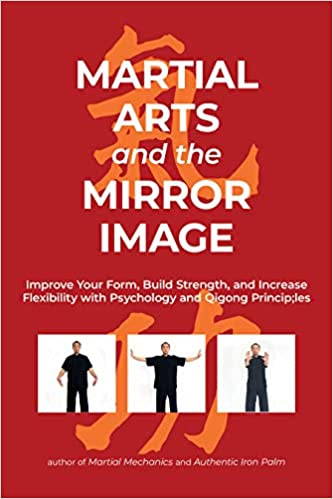
This is shown and explained in my book, MARTIAL ARTS AND THE MIRROR IMAGE )available on Amazon.com).


Saturday, October 11, 2025

THE FOUR LEVELS OF APPLICATION

 by Phillip Starr

Back in the day, China didn't have training halls such as those we enjoy in the West. They still don't; most training was and still is, conducted outdoors. And the teachers of those bygone years were very concerned about people hiding in the bushes and watching them teach and practice; they feared that the secrets of their style might be learned by others who might then find ways of defeating them. I'm quite sure that they didn't plan to “spoon-feed” their students; they wanted and expected them to train hard to learn the entire system. Those who were in a hurry or who just didn't want to bother with it weren't worth the trouble of teaching beyond a certain level, anyway.

And so it was that they began to “camouflage” certain techniques in the forms. The veils were several, which I refer to as “levels” of breaking down the information contained in various forms. I'll cover them briefly here:

The first level I call “Obvious” because what you see is exactly what you get. A punch is no more than a punch and a kick is just a kick. Not every technique or posture contains hidden breakdowns and too many people, in their enthusiasm for unveiling these things get carried away and start “seeing a wolf behind every tree.”

The second level I call “Concealed” and it involved hidden joint techniques and/or chokes as well as holding techniques. These can be rather difficult to uncover; an extensive knowledge and understanding of such techniques is necessary. If you're not familiar with a variety of such techniques, you're not likely to spot them.

The third level is the “Mysterious” level and involved hidden takedowns and throws that are concealed within the form(s). Like the previous level, finding them requires familiarity with such techniques.

The fourth level is the “Dark” level, wherein certain types of blows are applied to certain vital points. The points are mapped out in the form. But most forms do not contain this level of information; only a few do. You must learn to “decode” certain movements as you “read” your form.

To find levels 2 and 3 also require that you recognize certain “red flags”; that is, movements that don't seem to make sense in the form. For instance, in the first form of most karate styles as well as taekwondo -heian shodan (some call it ping-an shodan, and Okinawan styles refer to it as ping-an nidan) and known in taekwondo as chon-ji, there are several red flags right out of the gate:

  1. You step to the left in a forward stance and do a left low block. RED FLAG!

  2. You advance the right foot in a forward stance and execute a right lunge punch. RED FLAG!

  3. You pivot on the left foot, moving to the right. The right foot steps around 180 degrees to a forward stance and do a right low block. RED FLAG!

That didn't take long, huh? Why are these movements red flags? Well...

Movement #1: We're usually told that we're blocking a low level attack coming from the left. WHY would you ADVANCE into an attack to block it? If it's a kick, it'll certainly reach you before you get halfway through your step!

Movement #2: We're often told that following the block, we advance to punch the bad guy. Nah. If you're close enough to block, you're much too close to execute a lunging thrust! WAY too close!

Movement #3: We're told that a second bad guy attacks from the rear, so we turn and block his low-level attack. Then I ask, WHY are you stepping the long way around? It'd be much faster and more efficient to cimple reverse your stance, wouldn't it?

Red flags such as these indicate that the movements are not as they seem. To be brief, the first movement isn't a block at all...it's a pre-emptive thrust. The 2nd and 3rd movements show a peculiar throw, not another block and punch.

Forms are replete with such red flags. You must learn to recognize one when you see one, and then work diligently to figure it out (this is why familiarity with various throws and joint manipulations is so necessary). It is also why each movement in a form is to be done exactly so and why, if you don't understand a particular movement, you mustn't just go ahead and change it.


Friday, October 10, 2025

ENJOYING THE MEAL

 by Phillip Starr

Most group activities (such as meetings of almost any kind) in China involve various foods. And the Chinese truly love their native cuisine. It's the same in Japan. Unlike many Western barbarians (I say that with a smile), they take time to truly savor each mouthful while they also appreciate the aroma and even the appearance of the food. So many of us slug down our food with such zest that we often miss many of the subtleties, which add so much to the meal.

It is often the same in our martial arts practice; we tend to gobble down the meal without taking time to experience every part of it. While visiting Japan with my senior student, Hiro Misawa ( a guide of inestimatable value), we stopped in at a local sushi restaurant just a few blocks from the room where I was staying. It was a traditional eatery and Hiro started us off with two bowls of miso soup. Before I tried it, he told me that the cook had used a very subtle fish stock to cook the dish and I tried a spoonful. Instead of simply gulping down the soup as is my wont, I took time to gently savor it. Yes, the hint of fish was there; it was veiled and delicate rather than overbearing... I very much enjoyed this special soup.

It has occurred to me that this should be done with our techniques and especially, our forms. If we simply go crashing through them with hurried enthusiasm (what my teacher called “youthful enthusiasm”), we miss out on so much that is shrouded and difficult to see or feel. Such seemingly nebulous details will, once experienced, add so much to the technique or form! That which we once regarded as rather bland suddenly becomes a magnificent feast!

Go back to your first form, your first technique and taste it again. Savor it carefully and look for subtle flavors.


Thursday, October 9, 2025

CONDUCT

 by Yang Shuangxing

Back many years ago, there was a form of Japanese martial arts competition that was considerably different from what we see today. Known as kachi-toru (to win through successive victories) or kachi-nuke (win or be left out) worked like this:

The contestants (usually judo practitioners) lined up according to rank and experience. At the head of the line were the senior black belts and those of lesser rank or experience lined up. Those of lesser rank or experience lined up accordingly. Starting from the lowest end, the contestant with the least experience was paired off with the one next to him. Whoever lost the bout would sit back down and the winner would take on the next person in line. He would continue to do this until he was defeated...then he would sit down and let the victor go on.

In the lower ranks, winners seldom made it through more than three bouts before being defeated. But in the brown and black belt grades, conditioning and the ability to execute technique was often quite high and a skilled judoka might burn through four or five opponents before being bested.

Now, this whole thing seems a bit unfair, right? They were...just like real life. That's one of the lessons competitors would take with them afterwards. But if you look closely at it, it wasn't as unfair as you'd think. Sure, the victor would be warmed up – but he'd also be tired and sucking wind when his next opponent entered the ring. BUT...the new opponent had just risen up from sitting in seiza; there was no call as to who was “on deck”, or time to stretch out and loosen up before the bout. So he'd walk in cold and a bit (maybe a LOT) stiff. It'd be akin to a mugging in real life; there's no time to get warmed up first...

Yes, the “last man standing” was the winner, but don't get your panties in a twaddle about that; if you'd won the last match, you'd probably bested a guy who has already put away four or even five guys. The whole concept of a “winner” was changed. You might have won, but everyone was talking about the brown belt who put away six opponents before he was finally defeated. The goal of such competitions wasn't to produce “champions”, but to allow everyone to conduct him or her self in a manner that displayed, under very difficult circumstances, the kind of conduct that would make one successful in a real encounter or life in general. Proper etiquette wasn't named as the goal, but it was certainly a by-product of these events.

Looking at it from the angle of personal behavior and the constant maintenance of a strong spirit were considered to be more valuable attributes than the more easily measured qualities of success or failure. Martial arts ethics came to the fore. The childish tantrums we often see in professional sports (ie., tennis, and numerous others) might be tolerated in a modern setting, but they're in opposition to what the Martial Way emphasizes in so far as conduct is concerned. For instance, many years ago, a young judoka scored a point in a competition with a clean, textbook-perfect hip throw. When the center judge announced “Ippon” (full point), the young man raised his fist in joy. Then the official shouted “Hansoku-gachi” (loss by forfeit). The youngster was shocked but knew better than to EVER argue with a referee, so he sat down at ringside. The referee walked over to him and told him to save the celebrations for later. Congratulating yourself like that on the battlefield could very easily get you killed.

At a different event, the two contestants struggled against each other for some time, but they were getting nowhere. As is the custom, the center judge stopped the match and told them to return to their starting positions (for a short 30 second break). One of them turned around and walked back to his starting position and the judge immediately called his opponent the winner of the bout! Why? Had this been an actual combat situation, turning one's back on the opponent leaves a potentially lethal gap in one's awareness. A gap in proper conduct.

Yes, of course, the contest arena isn't a real battlefield and regardless of how serious the contestants may be, it's a world away from the real thing where one's life is on the line. But what we're trying to reinforce is an ethos; a state of mind that, although we're not engaged in a real life-and-death struggle, emerges with a sense of that spirit. The perfect place to see proper conduct is in the viewing of a sumo match. When the action is halted by the referee, the sumotori don't lose their focus at all. They don't jump around or pump their fists in the air when they win. They are relaxed before and after the action of the bout. Their attention never goes slack. Their conduct isn't one of pomposity or machismo...it's a kind of quiet awareness, sober and steady bearing.

While it is true that the values of the martial ways transcend culture, it is equally true that the same values are based upon the tenets of a parent culture. Those who feel this in unimportant will never grasp the true nature of these arts. Because these arts and their ethos are so different from many of the prevalent attitudes that we have in the West and the modern world in general, they present a real challenge to those who are able to overcome some of their own prejudices and expectations to try and understand them on their own terms. They were created as integral parts of the cultures that bore them and to attempt to separate them from their parent cultures is, for the most part, a waste of time. To ignore the dimension of proper conduct that runs so deeply through them is a destructive error.


Wednesday, October 8, 2025

COLORED BELTS...THE TRUTH

 by Phillip Starr

I imagine many of you have heard the version of how the Japanese colored belt system came to be; a white belt signified innocence and/or a blank slate for beginners, after putting out a lot of sweat, the belt then turned yellow. Because practice was often held outdoors, grass stains caused it to turn green. More wear and tear, and dirt ultimately caused it to become brown and then finally, black. It's a cute story. But altogether inaccurate.

It all started in judo, actually. According to the official history of the Kodokan (judo world headquarters), it is noted that in 1883 Dr. Kano (the founder of judo) decided to separate the student body of the then-new Kodokan into two groups; one would be those whose skills were sufficient for them to be considered “seniors”, and they were known as the yudansha (“graded group”). All others were mudansha (“without grade group”). That year, only two were given the grade of shodan (“first grade”); Tsunejiro Tomita and Shiro Saigo. Tomita would go on to demonstrate judo in the U.S. and elsewhere, and a fictionalized version of Saigo's exploits as the hero of a popular novel would later be turned into a popular film by Akira Kurosawa (the film was “Sugata Sanshiro” and is centered around the early contest between Kano's new judo and the classical jujutsu schools).

Kano's implementation of a grading system (known as dan-i) was revolutionary in the martial arts community of the day. For eons, ranks were awarded through a series of “menkyo” (licenses), which was usually in the form of a scroll or paper. These were used in other arts (such as flower arranging and so forth) as well, and there were usually just a few in the grading system. A menkyo might be granted to indicate that the recipient had mastered part or all of the curriculum or had received instruction in the secret lore of the system. In the martial arts, there was scant need for menkyo from a practical perspective; one either had the skills or not, and his survival in battle was better proof of that than a piece of paper. This worked well for the feudal systems and is still in place today in some systems.

Kano was an educator (much of what he wrote is still studied in universities around the world), so he would have known about reinforcing progress through some tangible sign. Thus came the awarding of kyu (“step”) grades and the “dan” grades. This wasn't a new idea at all; such grades had been awarded in many arts – from music to flower arranging and even the game of go – since the sixteenth century. But Kano's system did not initially include various colored belts. It wasn't until 1886 that he gave belts as a symbol of rank. It was at this time that his judo was pitted against the Yoshin-ryu of Hikosuke Totsuka in an event organized by the Tokyo police. Kano's judoka won handily and the membership of the Kodokan blossomed; he may have been motivated to employ colored belts due to the increasing number of pupils starting to train in judo.

Newer students would have had trouble distinguishing another novice from a senior; black belts would be a fine way to identify the seniors from whom novices could seek advice or instruction. Initially, these belts were stiff silk (kaku-obi) and worn with formal kimono. In 1907, the cotton belt was introduced. Although Kano used a 10-level grading system, he didn't adopt a colored belt scheme. In the Kodokan, there were only white and black belts. So, how did the system of colored belts come to be?

This innovation came from an extraordinary judoka, Mikonosuke Kawaishi, who began judo under Kano's tutelage at the turn of the century. In 1926, he taught judo in the U.S., then moved to England, where he taught very briefly before teaching in Paris in 1936. He remained there until WWII came along when he went back to Japan and finished the conflict in a Manchurian prison camp. However, he returned to Paris and taught there again until his death in 1969. He was a great innovator, always exploring new ways to introduce the art to non-Japanese. He experimented with the awarding of different colored belts to indicate a student's progress and the idea caught on, spreading to judo schools throughout Europe. By the early 1950's, it was seen in U.S. Judo and even karate clubs and by the 1960's, groups such as the U.S. Judo Federation had devised rather complex ranking levels that differed for children, teens, and adults.

And what about the top-echelon belts...the red and white striped, and red belts? Actually Kano did eventually provide for these within his ranking system. And he likely drew on historical sources in so far as the colors are concerned. Beginning with the Genpei War (1180-1185), in which two sides used distinctive battle flags and other paraphenalia – red on the side of the Taira clan (aka. Heike) and white for the forces of the Minamoto (aka. Genji) clan – red and white have figured prominently in Japanese history. In 1884 Kano hosted the first Red and White Tournament at the Kodokan (it is still held today). For many years, a strip of red cloth was tied around the waist of one contestant to distinguish him from his opponent. This was also done in kendo matches. So, Kano was drawing on a well-established concept when he created a red and white striped belt that was to be worn by those of 6th to 8th dan grades. A solid red belt is worn by those of 9th and 10th dan ranks.

No provisions were made for an 11th dan. The 12th dan was reserved for Kano and designated by a white belt, twice the usual width. This was done by the Kodokan so that no one could ever equal his status. Today, different schools and organization utilize a wide array of colored belts and for many, this is little more than a scheme; more belts mean more tests and test fees. In Japan, most kyu grades wear white belts, save for the last 3 kyu grades, which are usually brown belted. Many martial disciplines, including kendo, aikido, iaido, kyudo, and virtually all of the koryu (traditional martial arts of Japan) don't use colored belts at all. Using belts or not using belts...there are good arguments to be made on both sides. But if one wishes to enter the realm of these arts, one must make accomodations for their rules and regulations.