TRADITIONAL MARTIAL ARTS

TRADITIONAL MARTIAL ARTS

Tuesday, January 14, 2025

ACQUIRING REAL STRENGTH

 by Phillip Starr

If I had a magic wand that would enable me to instantly bestow a high level of (martial arts) skill upon my students, I would use it for kindling. I have mentioned this to some of my students over the years and they're always surprised. “Why?” they ask. “Why wouldn't you use it?”

Because acquisition of high physical skill must be accompanied by an equally high level of discipline and spirit,” I tell them. “And it is the struggle for the skill that makes us strong.”

Martial skill in and of itself is very nice but believe it or not, it's not really the entire goal. The struggle; the discipline, the effort and pain and sacrifice that it takes to achieve high skill is, I believe, the most important thing. It is only through this special forge and tempering process that we can truly come to understand and develop ourselves.

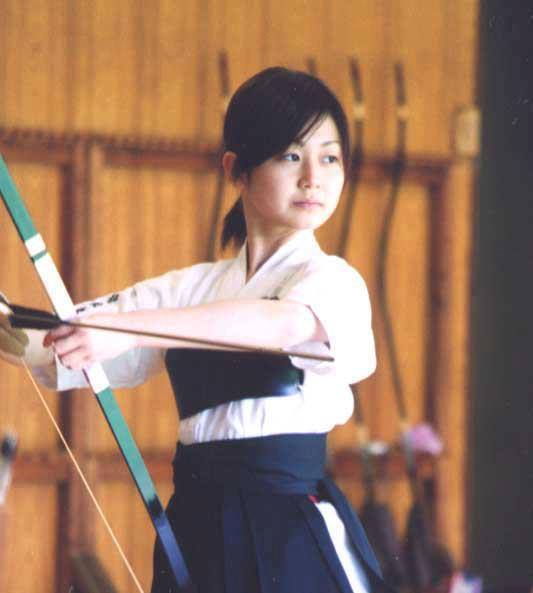
As in the art of kyudo (Japanese archery), the goal is not necessarily to hit the bull's eye. To a Westerner, this would seem nonsensical. But as I mentioned in an earlier writing, we tend to see (Eastern) things through Western eyes. This distorts our vision. We are not seeing truly (which is different from not truly seeing).

No, the object in kyudo and in all of the martial ways is to perfect every aspect of the outer movements. This must naturally lead to perfection of the internal aspects as well. Perfection of the self. And if you hit the bull's eye from time to time, that's nice. But stop trying to hit it. Pay attention to how you're standing, how you're breathing, what your mind is doing (or not doing).

Do it perfectly. You'll understand when you get there.


Monday, January 13, 2025

ABSORB WHAT IS USEFUL...

 by Phillip Starr

One of the very worst pieces of advice ever given to the martial arts community at large came from the lips of Bruce Lee.

"Absorb what is useful,

Reject what is useless,

Add what is specifically your own."

Determining just what is useful and what isn't is quite a daunting task and one that should be examined closely. After all, a goodly number of today's so-called "mixed martial arts" crowd as well as followers of numerous eclectic martial ways state very clearly that traditional martial arts aren't entirely applicable to modern combat or combat at all. They believe that numerous techniques that are taught within the traditional martial arts either don't work very well or, in some cases, not at all. This, they say, is why they have chosen to follow their "own paths."

Executing a correct reverse punch, front snap kick, kotegaeshi, or o-soto-gari is a pretty daunting task for most raw beginners who have had little or no previous martial arts training. The new student can spend hours working on any one of these techniques for a whole month and it still is practically worthless in a real fight. The reason why is obvious; to develop any technique so that it is truly usable requires a great deal of practice over a period of time! There are no short cuts. My teacher said that developing effective technique is like making tea. It can't be hurried and any attempt to do so will only ruin the drink.

It would be easy but very premature and terribly foolish for the novice to simply dismiss these fundamental techniques as being "useless." The same holds true for other, more advanced techniques that he or she will eventually learn. I'm sure that you've encountered techniques that just didn't work at first. I know I have. Still do. But with patience, some introspection, and lots of practice you've been able to see how they should be done, where your mistakes were, and suddenly they become functional!

When you learn a technique that doesn't seem to work well for you, ask yourself, "why?" What are you doing wrong? Sometimes the error lies in the physical execution of the technique but sometimes it is hidden in a less obvious place. Maybe it's your timing that's off - and that can be indicative of a mental/psychological error or block of some kind, can't it? Perhaps it's your approach to the application of the technique or your approach (physical, mental, or even spiritual) towards your training "opponent." Regardless, the error is thine. Find it and correct it. Sometimes it's the finding of the error that corrects it.

To say that techniques of the traditional martial arts are not effective (in self-defense) is a blatant display of one's own ignorance, and perhaps, one's unwillingness to put in the required practice (which is a nice way of saying "lazy"). In days long since past, professional warriors (e.g., policemen, soldiers, bodyguards, and their teachers) relied on these arts for their very survival. Back then, it was pretty easy to determine if a given technique worked. If it didn't, you died. Those who developed techniques that didn't work took their failures with them to their graves. For the most part, we'll never know what they were.

The techniques that did work are still with us to this day. If they didn't work, they would have been buried long ago. So, to say that the surviving traditional techniques don't really work is, in my opinion, a statement made by someone who has never learned genuine traditional technique...or who is unwilling, for one reason or another, to put in the time and training required to develop effective technique.

Beginning piano students dare not say that the classics are worthless and no longer functional! The masters who contributed to the creation of the traditional martial disciplines are our Bachs, Beethovens, and Mozarts.

To truly understand a technique and how it should be performed correctly requires at least 10,000 repetitions. In karate or kung-fu this isn't terribly difficult, considering that you can easily practice 100 punches each day. In 100 days you should be able to perform the technique correctly, more or less. That doesn't mean it can't be improved, though.

But that's not the same as making it workable. To be able to perform a technique effectively in combat requires much more practice. You see, the effectiveness of a given technique, whether it's a punch, a kick, a joint twist or throw from aikido or judo...involves much more than just being able to perform the physical aspects of the technique correctly. Much. More.

Back when I trained in forms of Japanese karate, I could not, for the life of me, get a roundhouse kick to work. Actually, it took MONTHS before I figured out how to do it correctly. I guess I just had a mental block and I couldn't imagine how to do it...but once I was able to throw a roundhouse kick, I couldn't figure out how such a kick would ever be useful in fighting! I suppose Mr. Lee would have told me to reject it because, as far as I was concerned, it was pretty useless...

Then came Baguazhang. At first glance, this art seems to have about as much in common with combat as a fish does to a bicycle. It would have been all too easy to simply toss it away as being some sort of pointless, flowery, Chinese bilge water. But I didn't. I stuck with it and studied it...in depth. I examined it carefully, examined myself, examined its strange footwork and body movements...and I practiced and then when I was sick of it, I practiced some more. And when I had problems making it work (which was pretty much all the time, at first), I stayed with it and figured out WHY I was having problems.

In any given martial discipline, at least a decade (or more) is required if one wants to truly understand the art. The problem is that most Westerners don't want to spend that much time in training. They want "instant martial arts." We're accustomed to having "instant food" (which isn't really food), "instant entertainment", and now we want "instant martial arts." But there isn't such an animal...never was, and never will be.

So, rather than absorbing what you find immediately useful and rejecting what you think is useless, just ABSORB.


Sunday, January 12, 2025

A DAILY HABIT

 by Phillip Starr

Most of us engage in certain daily “habits” without thinking much about them and if we consciously skip over one of them, we feel as if we've neglected to do something important. We wake up, brush our teeth, and tend to various small chores such as shaving, brushing our hair, making the bed, and so on. Such things have become a part of our lifestyles.

Daily practice of your chosen martial art must likewise become a daily habit...like brushing your teeth. It needn't use up a great deal of time. If you can put in just 20-30 minutes, that's fine. Don't have time? Stop with the excuses...everybody has 20-30 minutes of free time each day. If you're convinced that you absolutely don't have the much free time, I suggest getting up a bit earlier. It's a matter of priorities...how important is your training to you? If it's really important, you'll find a way; if not, you'll find an excuse.

You should strive to do it at least 6 days a week. If you do this for 30 days, it'll become a habit and as you continue to do it, the more ingrained the habit becomes. Practicing only once a week (or less) or Tuesdays and Thursdays just doesn't cut it IF you want to make your art your lifestyle. It mustn't be relegated to the status of a curious hobby that you do on certain days of the week; doing so will not foster the development of high skill. At all.

Daily practice will soon produce some very positive results...not just in terms of your skill level, but also in your health, productivity at work, and even relationships. It doesn't happen all at once or very quickly; it takes time. But good things come to those who practice everyday.


Saturday, January 11, 2025

WUJI

 by Phillip Starr

At the beginning of a Taijiquan, Xingyiquan, or Baguazhang form, there is a time when the practitioner stands still, seemingly doing nothing. This is actually a posture known as “Wuji.” I consider it to be one of the most critical, if not THE most important posture of the set. Just what it and what does the word mean?

Wuji (無極)"limitless; infinite" is a compound of “wu”, which means "without; not have; there is not; nothing, nothingness" and “ji”, which translates as "ridgepole; roof ridge; highest/utmost point; extreme; earth's pole; reach the end; attain; exhaust". In analogy with the figurative meanings of English “pole", Chinese ji” can mean "; geographic pole, direction" (e.g., four corners of the earth; the ends of the earth).

According to Taoist philosophy, wuji is what existed prior to the creation of yin and yang (negative and positive polarities, respectively). It gave birth to yin and yang (maybe this is referring to the “big bang”) and consequently, the 10,000 things (in old Chinese language, the term “10,000” refers to a number that is limitless).

But what does this have to do with practicing a martial discipline? In the beginning of each set the mind is to be calmed and the body must relax (the correct Chinese term is “song”). Tension is consciously released and allowed to (figuratively) pour out the soles of the feet and into the ground, This sets the tone for the remainder of the form, which is why I place such importance on it.

At this point, with the mind calmed, the breath dropped into the lower abdomen (dantien), and the body properly relaxed (remember, it is “song” as opposed to being what I call “damp rag” relaxed), there is (great) potential. And that's how I see Wuji; it contains POTENTIAL, which is something that cannot be weighed, measured, or held in the hand. And this potential gives birth to yin and yang (which also can't be seen or measured because they are not “things”; they are abstract constructs). Any unnecessary tension – mental or physical – will block much or all of the potential contained within the posture. Relax and let the form begin itself...


THE WORLD AS A DOJO

 by Phillip Starr

The young man knew a typhoon was imminent. The time was perfect. He had managed to drag a large sheet of wood with him onto the roof of his house. The wind was beginning to howl and the rain pelted him. Within seconds, he was soaked. He bent over and took hold of the wood panel. Standing in his best horse-riding stance, he lowered his breath and held the panel up, allowing the wind to catch it. What a perfect opportunity to test his stance and his breath!

The crazy youngster who did this would later gain international acclaim as the Father of Japanese Karate. His name was Gichin Funakoshi.

Numerous other well-known martial arts figures frequently used the outdoors as their natural training hall. Masutatsu Oyama, the legendary founder of Kyokushin karate, lived alone in the mountains for an extended period of time while he trained his body, mind, and spirit. Small trees served as his makiwara. Rocks served as weights for him to lift, and the ice-cold daggers of water from numerous waterfalls helped him learn to control his mind and develop an iron will. Even into his old age, Oyama was very fond of training outdoors and his followers continue this tradition today.

The revered founder of aikido, Morihei Uyeshiba, used to practice swordsmanship by swinging small logs when he lived in a small farming community in the northern province of Hokkaido, which is also quite cold... what is it with these martial arts types and COLD???. I once met a gentleman who had known O-Sensei Uyeshiba and he told me that the old man's forearms were the same thickness all the way down; they didn't narrow at the wrist and he had a grip that could crush bone!

Numerous Okinawan and Japanese karate practitioners would practice on the beaches and in the surf. Believe me, performing a kata in the sand is no easy task and it's even worse when you're being pounded by small incoming waves. I have actually done it and focusing your mind while sitting under a cold waterfall is extremely difficult. I tried that, too! I think it was a week before I could feel my toes again!

There's no need to restrict our practice to the dojo - a nice, clean place that is heated (or cooled, depending upon the season) and well-equipped. We can practice anywhere! The world can provide us with all of the training devices we require. Those of you who have read my first book, The Making Of A Butterfly , will recall the story about my teacher meditating in the snow in his backyard. I respectfully joined him and nearly froze!

However, one of the main points of this article is the fact that these people PRACTICED DAILY. They didn't do it just on the nights they attended class. They didn't wait until they could train inside a proper covered facility (and some didn't have much of a facility in which to train even when they attended class!). They took it upon themselves to find ways to use the world as their training halls and improve themselves with what nature provided. It is this kind of spirit that contributed to their marvelous success in the martial arts.


Thursday, January 9, 2025

WHAT ARE YOU REALLY UP AGAINST?

 By Phillip Starr

Although we, as martial arts practitioners, constantly train to be able to effectively defend ourselves, very few of us truly understand what we could very easily be up against when it comes to the paved jungles in which we live and strive to survive. We hear and talk about “the street fighter” without necessarily knowing much of anything about these creatures.

To begin with, these animals aren't stupid or clumsy. They're smart and very tough s.o.b.'s. Many of them have a smattering of martial arts skill, just enough to make them really dangerous. They HAVE to be tough to survive on the streets. They're not compliant, foolhardy, dimwitted wimps. Not at all. And should you ever be accosted by one, you'll only get one shot. And it had better count...it must cause some serious damage because if it just causes a bit of pain, it'll just make him real unhappy with you.

For a time many years ago, I worked inside the walls of a state penitentiary. If you really want to know what a true “badass” is, this is the place to look! I remember one inmate nicknamed “Shorty” (you can guess how large he was). He looked like a human Coke machine and it was all muscle...no fat at all. He lifted weights daily and had a hair-trigger temper. If a guy like this ever got hold of you, you'd be looking at a real serious problem! It scared ME (none of us carried any weapons at all...nothing), so I trained extra hard every day to sharpen my skills.

And there many others like Shorty...not as big, but very strong and tough. The idea of fighting just a single assailant on the street is an error (a very serious one), Lone wolves don't survive for long and most thugs travel in packs. So the idea of spending a lot of time thumping just one guy is a bad mistake...let alone taking him to the ground and wrestling around with him in the mud and the blood and the beer...and gravel, broken glass, and whatever else is on the ground. You can bet that his buddies are in the wings and watching. They'll happily step forward and quickly turn you into a very icky wet spot on the concrete while you're engaged in your makeshift wrestling bout.

And anyway, the odds of a street thug who accosts you being armed with something is pretty close to 100% nowadays. If your defensive tactics/techniques against weapons aren't up to snuff, you'll quickly become a statistic.

Don't take your ability to effectively defend yourself for granted. Train hard, get fit. The bad guys are.


Wednesday, January 8, 2025

WEIGHT TRAINING FOR MARTIAL ARTS

 by Phillip Starr

No, this isn't a “how to” article; dozens and dozens of good books have already been written on the subject of weight lifting and more than a few on weight lifting for martial arts. It's actually about “resistance training”, which a large number of neijia stylists (those who practice taijiquan, baguazhang, or xingyiquan) firmly believe is counter-productive to acquiring real skill in their particular discipline.

Foo.

Past masters of these arts regularly used resistance exercises to toughen and strengthen certain muscles and muscle groups. There's no such animal as a martial art that requires NO STRENGTH to be used effectively. Most, if not all, of the neijia Masters of times past regularly practiced forms of resistance training, from weights to various other apparatuses. And anyway, stance training (standing in deep stances that stress the legs and hips) are actually forms of resistance training, right? Heck, push-ups, leg lifts, and the like are all forms of resistance training that make use of your body weight.

On the other hand, any so-called martial art that emphasizes the development of large muscles and requires the use of much strength in its application isn't what it claims to be. As Master Seiyu Oyata (10th dan, dec.) told me, “Any martial art that requires a lot of strength to be effective is not really a martial art. Martial arts were developed so that the small and weak could overcome the large and strong.” And he was living proof of that.

In generations past, a wide array of devices were employed in resistance training. These included iron geta, “locks” (usually made of stone or concrete, they were quite similar to today's kettlebells), nigiri-gami (wide mouth jars that were filled with stones or sand, iron balls (usually quite large), and so on. Improvements in technology today enable practitioners to utilize modern ankle and wrist weights, dumbells and barbells, kettlebells, stretch-cords (surgical tubing works very well) and a wide variety of other such training aids. Different styles of gong-fu and karate seem to prefer different pieces of equipment. And most of them can be used into old age, I know; I use a number of them every day!

It's absolutely essential that one learns to train correctly and not hurry or over-do lest one injure oneself. Proper training enhances one's technique as speed and strength are very gradually increased. Such training is also excellent for overall health, including those of us who are now “senior citizens.” Resistance training comes in many forms; using one's own body weight is very common. For instance, push-ups, pull-ups, leg lifts, and holding a static horse-riding stance are a few such resistance exercises. A partner can be sometimes be used to assist with them (if the student is fit enough to handle such exercises). I remember standing in a horse-riding stance and having a partner holding onto my shoulders as he stood on my legs from behind. Then I'd have to squat down a bit...up and down for several reps. And with a classmate on our backs, we'd advance forward in a forward stance, being careful not to rise up (lest our teacher berate us) or stumble.

If you practice such exercises, it's important to train with them very regularly. Intermittent training pretty much guarantees injuries.