TRADITIONAL MARTIAL ARTS

TRADITIONAL MARTIAL ARTS

Friday, April 7, 2023

THE BROKEN BOW

 by Phillip Starr

The bow is shattered, arrows are all gone.

At this critical moment, cast aside all doubts.

Shoot, without the slightest delay.”


These lines were penned by Zen master Bukko Kokushi during the Kamakura era (1226-1286) in Japan. Typical of Zen-inspired poetry, it's a bit puzzling. How do you shoot if your bow is broken and your arrows are all gone? For an answer, we must turn to kyudo...most of you have never practiced it and fewer than that will ever engage in it but the answer it provides can be applied to any martial Way.

Kyudo is the Japanese Way of archery. It's one of the less popular martial disciplines, especially outside of Japan (where high-level teachers are pretty much non-existant). Equipment is terribly expensive; a good yumi (the bow, which is handmade with laminations of bamboo and various woods) can cost as much as $4,500.00, although you can get modern ones of considerable less quality for as little as $500. Then, too, the precise dictates of the art seem to have more in common with the tea ceremony than with a bloody fighting art. A kyudo neophyte will spend months learning the intricacies of kyu-ha, the etiquette and rituals of the art.


The details involved are intimidating and all of them must be committed to memory until the practitioner has integrated them on a level that is virtually instinctive. For instance, there are a certain number of steps taken to approach the shooting stand, the angle at which the bow is held when the arrow is nocked must be just right. All of the various facets of the mechanics and movements of drawing and shooting are precisely set into forms that have been formalized for many, many years. And they must all be learned exactly. There is even a set of certain movements used for approaching the target, leaning the bow against it, and removing arrows from the target! Kyudo is a bit long on outer movements, to say the least.


Many of you will think that kyudo focuses an awful lot on seemingly petty details, but consider that a beginning karate or gong-fu student likely thought he could throw a pretty decent punch...until he started training. His chin must be held just so, his shoulders have to be adjusted here, his hips have to move exactly this way, and so on. I've been known to spend as much as two hours going over the details of a simple reverse punch and I could easily have gone on for another two or three. I've seen novices become so overwhelmed by the details of their art that they actually freeze. Their eyes betray their minds, which are frantically trying to recall all of the details...and they become as statues!


Many uninformed people present considerable criticism about this approach to what is allegedly a “fighting art.” They often make very ignorant commentaries, claiming that the practitioner who trains in this way will be so concerned with ensuring that all of the tiny details are just right that he'd be quickly pounded into dogmeat before he can mount an effective defense. This reasoning is based on the erroneous assumption that this stage of training (known as toteki), is the FINAL goal. Not hardly.


In time, the kyudo student (kyudoka) begins to integrate the details of the art into his performance. He doesn't have to count his steps as he approaches the stand; they come out naturally. The arrow is correctly nocked without conscious effort. This is the beginning of what is called zaiteki; the bow and archer are becoming one. Practitioners of other martial Ways may use other terms to describe the same thing; they often speak of mushin (無心 wuxin in Chinese), which is a term often heard in the practice of Zen. Mu (Wu) means “nothing” or “without”, while shin (xin) refers to the mind or consciousness. Thus, the term is often translated as “without consciousness” (also, “no mind”). Rather than inferring that one is unconscious, this term indicates that the practitioner no longer has to consciously “think” about what to do.


The practitioner moves naturally; he has passed beyond the level of training that required him to concentrate on the details of his technique. His movements are spontaneous and correct. The technique has become “no-technique.” If you can drive a car, play the piano, or even tie your shoes, you already are familiar with this concept. But there was a time when you stared at the piano keys and tried to get your fingers to move to the right spots. With lots of practice, you eventually reached a stage wherein you no longer had to think about it; your fingers “knew” where to go.

If you're a skilled typist and you've been at it a while, you'd likely be stumped now if someone asked you about the layout of the keys/keyboard. Like, which keys are on either side of the letter “J?” You may be able to type 80 words a minute, but that question confounds you. That's because you've achieved a certain mushin in your ability to type. Now, there's a considerable difference between the “no-technique” of the highly skilled martial artist and the “non-technique” of the novice. Neither the expert nor the beginner can probably tell you what adjoins the “J” key but that doesn't mean they're at the same level in terms of their understanding and ability to type. One must strive to achieve the stage of “no-technique” and there's no short-cut, no way to bypass technique altogether. It's going to take time. Lots of it.


The bow, the arrows...as the Zen master's poem reminds us, these are external details. Drive yourself past them through severe, unceasing training and effort and press in to the core of the art. When you art is fully integrated in body, mind, and spirit, the bows and arrows, the details of the punch, kick, or throw are unimportant. At the critical moment, as Bukko advised, you must penetrate the target without the slightest delay.


Thursday, April 6, 2023

THE BEST NIGHT'S SLEEP...

 by Phillip Starr

Vietnam, 1966. Taekwondo was young and making its debut. Three special ROK divisions were deployed: the White Horse Divison, the Blue Dragon, and the Tiger Division. To even apply for service in one of these units, one had to hold a minimum rank of 2nd grade black belt in taekwondo. The “uniform of the day” didn't include combat fatigues; it was a karate uniform (the new V-neck style taekwondo uniforms hadn't yet been invented) and rather than doing a lot of close-order drill in the morning, troops practiced basic punches and kicks.

They were as tough as case-hardened steel and absolutely merciless. Both the NVA and VC were terrified of them. In fact, none of their fire bases were ever attacked – throughout the entire war! They preferred to engage the enemy at close quarters, using their hardened fists and feet to quickly dispatch their opponents.


A dear friend of mine (Mike Biggs, dec.) who served in Vietnam for three tours with Special Forces (green berets) told me that the best night's sleep he had the whole time was when he stayed in the White Horse Division's fire base. Giggling, he told me that he slept very soundly, knowing that there were no enemy troops with three miles of the place. Both the NVA and VC went to great lengths to avoid the fire bases of these units.


Mike got the chance to watch the Koreans in their early morning drills and taekwondo practice. “It was brutal”, he said. “Anyone who screwed up was kicked in the head by his Lieutenant”, Mike went on. “If they couldn't find any VC to whip, they'd fight each other!” He was more than a little impressed with their hand-to-hand skills.


Some of the members and instructors of these special divisions emigrated to the U.S., where they could make a good living teaching taekwondo. In Korea, martial arts teachers weren't held in high esteem and were near the bottom of the social ladder. Not so in America! The young Americans who trained under these early taekwondo pioneers endured very tough training, but they developed considerable skill. I remember because I knew many of them.


In fact, U.S. military personnel were stationed in Japan and Okinawa as well and many of them took up the study of martial arts. They would return home and open their schools and clubs, and train their students with the same intensity that they had endured. But with the passage of time, things changed considerably. Training became much less intense and focused. What happened?


Wednesday, April 5, 2023

ANGRY?

 By Phillip Starr

I was mad enough to spit nails...I'd just started the broadsword form that my teacher was teaching me, and I messed up AGAIN in the SAME SPOT! Sifu Chen didn't move. He just stood there, waiting with his arms folded. I shook my head in disgust at my incompetence and said, “I'm sorry. I messed up AGAIN.” As I prepared to start over, sifu walked up and slapped my shoulder with a loud thwack. “Anger...you cannot afford it! It is a luxury!”

For a couple of seconds, I thought that that was a rather strange way of looking at this all-too-common emotion. But like so many things that sifu said which, on the surface, seemed rather odd, it was worth thinking about. Anger is a luxury because it permits us to focus our attention on only one thing; ourselves. Remember the last time your car stalled in traffic, or you got to the checkout counter at the supermarket and found that you'd forgotten your wallet? At times like these, nothing else in the world was on your mind but YOUR immediate problem. Your mind takes a little vacation...


In an actual fight – the kind of situation where that form was intended to be applied (or any of the others I had learned), that kind of self-indulgence could have cost me my life. As a martial arts practitioner, the price I'd have to pay for the luxury of getting angry was much too high. Some believe that anger “pumps us up” and for some simple situations, that may work – like kicking down a door. But in close combat where one must maintain an awareness of distance, timing, the possibility of multiple assailants – anger has no place at all.


Police officers, soldiers, and other such persons whose vocation may cause outbursts of anger are well aware of the consequences of relying on adrenaline-fueled anger to face emergencies. It wastes energy indiscriminately (usually when we need it most), it robs us of self-control precisely when we need to maintain complete control, and it blurs our minds so that we do not accurately see what is before us. As martial arts practitioners, it is an emotion that we cannot afford to indulge.


Tuesday, April 4, 2023

A SLOW TEN COUNT

 by Phillip “Pete” Starr

I was once reading an article written by a well-known outdoorsman on the basics of wilderness survival. Such subjects do interest me although the odds of me finding myself stranded out in the bush somewhere are pretty slim (I don't get out much, which is why I'm able to write my own articles and books). Anyway, this author suggested that when one is lost or stranded, one should pause long enough to count to a hundred so that the mind is able to relax enough to absorb the situation fully and focus fully on survival. For day to day situations that are stressful, maybe not a full hundred count – usually a good ten-count will do.

A few moments spent occupying the conscious mind with a simple, repetitive job can be very beneficial. And this is a central goal of the Dao (Do in Japanese)...such as the Japanese tea ceremony and Chinese/Japanese calligraphy. When the visitor to the tea hut pauses outside to rinse his mouth and hands from the water basin that is always there, it's a moment for him to clear his mind from the distractions of daily life. When the calligrapher sits and rubs his ink stick against the stone well, mixing the ink with water, he is not just preparing his utensils; he is doing the same thing...calming his thoughts and centering himself.


We “count to ten” in the martial Ways as well although few take advantage of the natural opportunities they have to do so when at the training hall. Although survival in the wilderness is a bit different from survival in the training hall, the time you take to prepare yourself for the rigors of training can be vital. This moment occurs with some frequency but it's not announced as a special event. One of the main ones occurs when you pause to bow.


In China, martial arts classes rarely involve bowing. It is my opinion that they should. Some gong-fu schools in the U.S. have adopted this practice, but it's very rarely seen in China. In Japanese martial Ways, the class bow is not simply a courtesy; the minds of the students are brought to a state of refined concentration. Matters outside of the training hall (or class in general) are put on hold temporarily. What matters is the lesson and training, and the direct experience of facing yourself through attacks and defenses against others, and the practice of form.


Beginners, who are still fumbling with the technical details of movement and technique generally lack the ability to make a strong, potentially harmful technique. If one of them strikes his partner, the harm done (if any) is usually quite minimal. More senior practitioners, however, are more serious and their technique is much stronger. They must be very mindful of what they're doing. The advanced student must more and more enter training with a complete grasp of the seriousness involved and the real possibility of hurting someone or being hurt himself. For him, the bowing and other such rituals should have greater significance.


Within the older Japanese martial arts (especially those intended for the battlefield) the rituals are a bit longer and more intense. There is more intensity to the bow that is much deeper and more concentrated than that found in lower levels or arts that were not developed for warfare. These forms of bowing and ritual take some time to learn and appreciate. In some of them (especially those exercises involving a partner) it is common to see the two participants advance and retreat a few steps before or after bowing. The elaborate nature of this kind of etiquette suggests that such rituals are more than merely quaint anachronisms, as many outsiders often suspect.


Rather, they are a dynamic way of preparing the participant mentally and spiritually for the rigors of the exercise that is to follow. They're a way of “counting to ten.” And although most modern martial arts devotees may not ever experience these arts and their accompanying rituals, he/she should strive to adopt a similar serious and focused attitude when preparing for training.


So, what if the practitioner practices a discipline in which the bow is little more than a quick nod and a slap of the thighs with the hands? Well, as I said earlier, the more serious the art and training, the more important is the ritual. If the practitioner is content to emgage in limited endeavors of sparring and dance routines (which are often all that's taught and learned in some schools), he/she has no need of ritual. But if he/she wants to devote him/her self to the study of a serious martial form which demands confronting the essentials of life and death, then it is inevitable that the mental/spiritual preparations he/she will need to make in his/her training will be as intense as those required for surviving mortal combat.


Monday, April 3, 2023

CLEAN SWEEP...

by Yang Xuangxing
 
The lowly foot sweep...it rarely gets the attention it deserves. The foot sweep, as used in karate and gong-fu, is a bit of a different animal than that which is used in arts such as judo; in the grappling arts, the sweep is usually employed to throw the opponent to the ground and score a point. In karate and gong-fu, it is used primarily as a means of disrupting the opponent's balance long enough to employ an effective strike or kick.

Although the sole of the foot (the bottom of the instep) is usually employed, many Chinese styles utilize the top part of the foot where it joins the lower leg (forming an “L” shape) as a “foot hook.” The sweep, done with the sole, is applied just above the ankle and although it sounds easy enough to do, it really requires considerable training. I would have students practice with a partner who held a staff vertically, with one end planted firmly on the floor. They had to sweep it with enough power that the staff swung up horizontally. After 25 sweeps with each foot, they learned quickly exactly what part of the foot is to be used. Hitting with the inner edge of the foot is a religious experience...you'll swear you saw God!


I also told them that I knew of people who practiced their sweep against a 55 gallon drum. Then several weeks later during sparring, a young senior student who was something of a “hot dog” was paired to spar with my oldest pupil, who was about 62 or so. The youngster charged in with a driving punch and the older fellow caught him with a sweep that was so powerful, both of the younger guy's feet left the ground and he crashed to the floor. Undiscouraged and very red-faced, he got back up and squared off with the older man again. When he thought the moment was right, he moved in again...but his timing wasn't as sharp as he'd thought. A second sweep, even stronger than the first, sent his backside into the air. It was as though he'd been clipped by a minivan!


After class, I complimented my older student on his sweeping technique. “How did you develop such a strong sweep”, I asked. He chuckled and said he'd practiced with a 55 gallon drum and when he was able to move it with his sweep, he began adding water to it...it was 1/5 full and he could still move it! Small wonder he sent a 160 lb. opponent into the air! I doubled over with laughter and I was amazed at his dedication and hard training!


When I used to compete back in the 60's and 70's, foot sweeps were allowed, so long as they contacted the “boot” area of the ankle and lower leg. Many fighters specialized in this technique. One of the best was from England, a shotokan stylist. I felt sorry for his opponents...he was legs from the armpits down and he used those long legs to sweep his opponents and then deliver punches to them before they'd even hit the ground!


In actual combat, the sweep can readily be applied to the sides of the knee and may cause severe damage to the joint. In some forms, sweeps are “hidden” in the form of kicks. The well-known “crescent-kick” is often eschewed by many instructors who claim that it's just too slow and obvious to be truly effective in combat. And they're right! So, why is it even included in the form...? Certainly, our martial arts forefathers (who used the various movements of the form in actual self-defense) would have recognized that, wouldn't they? Yes, they would and did.


According to my gong-fu teacher many years ago as well as Master Seiyu Oyata (10th dan, Okinawan karate), the “crescent kick” is actually intended as a sweep. The target areas are the lower legs, ankles, and knees. But the “kick” (sweep) is practiced much higher to foster the development of strong hips, which are essential for effective sweeping. Makes you stop and think, doesn't it?


Sunday, April 2, 2023

THE LARGEST OBSTACLE

 by Phillip Starr

     Like most martial arts teachers, I frequently subject my students - all of them - to various and sundry "tests" from time to time.  Administered without their knowledge (if they knew they were being "tested" the results would be tainted), these small and sometimes seemingly insignificant character tests allow me to look into their personalities or, as my teacher would have said, "see into their hearts."  This helps me to better understand each of them; how and why they learn or fail to learn, why they think and behave as they do, what they fear, what they believe (especially about themselves), and so on.  This enables me to be a more effective teacher.

     Over the many years that I have been involved in teaching, I have found one particular obstacle that is more insidious than all of the others combined.  It has ruined careers, destroyed countless relationships, and stunted the growth of many martial arts enthusiasts.  Of all the obstacles that are encountered by those who choose to follow the martial path, it is the largest and most dangerous.  It is also often the most difficult to see.

     And what might this obstacle be?

     Ego.


     Think about it.  Whenever someone fails to achieve something, they often think or say, "I can't do this."  The actual translation of that thought or statement is, "I won't do this."  Now, the why of that statement can vary considerably.  Some of the why’s would include:

· I don't really want to do it.

· I'm above doing that.  Doing that is beneath me.

· I'm too embarrassed to try.  Others will laugh at me.

· I'm afraid to try it but I don't want anyone else to know that I'm afraid.

· I don't want to put out that much effort.

And so on.


     Some time ago, I told my students at the end of class that we needed to clean up the training hall.  It needed to be dusted, vacuumed, and so on.  I watched to see who would pitch in and help.  Quite frankly, I was more than a little disappointed to see who didn't!


     On another occasion, a former student of mine went to the school of another martial arts teacher.  His ego wouldn't permit him to don a white belt and become a beginner again.  Instead, he behaved like a customer in a fast-food burger joint; he wanted it “his way!” He informed the instructor what it was that he wanted to learn and he fully expected the instructor to comply with his request!  Naturally, the teacher, who is a dear friend of mine, declined his request and when I heard of this incident I was very embarrassed and ashamed.


     I've met countless martial arts teachers over the years, many of whom would make the aforementioned pompous student look rather humble.  It has been my experience that those who insist on being addressed as "Master", "Grandmaster", "Great Grandmaster", "Hanshi", "Soke", "Grand Ultra-Cosmic Poohbah", and all other manner of eloquent titles...aren't.  Their egos are strangling them. I've met and trained with some of the greatest martial arts teachers of our time - Hidetaka Nishiyama, Seiyu Oyata, W.C. Chen - and none of them were ever addressed as "Great Master So-and-So."  Known simply as "sensei" or "sifu", they were exceptional men whose skill was of the highest caliber.  They weren't interested in titles; their sole concern lay in the development of real skill and in imparting that skill and knowledge to others.


     Another fine example of such a teacher was my friend, Sherman Harrill.  He had trained in Isshin-ryu karate under the founder, Tatsuo Shimabuku, and had spent decades perfecting his skill and researching what he had been taught.  For years, "Sherm" wouldn't wear a colored belt at all.  He'd wear a karategi (karate uniform), but no belt.  I used to harass him about it and he ignored me until I mentioned that a uniform without a belt just looked plain dorky.  I must have struck a nerve because shortly after I made that remark, he began wearing a belt. But...he insisted on wearing a white belt!


He said that he was really just a beginner and so began another round of me harassing him about not wearing the appropriate colored belt.  It took several years of loud complaining before he finally acquiesced and put on a proper black belt. Sherm didn't know the meaning of the word "ego."  I don't believe I ever heard anyone refer to him as "master" and I shudder to think what he might have done to who anyone who did.  Sherm cared nothing for titles.  Or belts (obviously).  What he cared about was knowledge and skill and he'd go to whatever lengths he needed to endure in order to learn.


     Another excellent example is that of another close friend, Mr. Ron Christenham. Known far and wide simply as "sensei" (I imagine there are many people who don't know his real name - even other martial arts instructors, including me, refer to him as "sensei" and everyone knows exactly who we're talking about), he exemplifies what a genuine martial arts teacher should be.  He doesn't try to do it; he has simply become it.  His unassuming, humble, and polite manner conceals his remarkable skill and extensive knowledge of the arts.  He is the perfect antithesis of the sort of teacher who revels in being called "master", grandmaster", or other high-flying titles.  He doesn't strut around with a puffed-out chest and his uniform is not adorned with patches that proclaim him as "instructor", "master", or anything else.  But if you were to walk into his aikido class, there would be no question as to the identity of this man.  You can feel his spirit from across the room!


     Martial arts are much more than learning some fancy punches, kicks, and throws. They’re more than a pretty uniform with patches all over it (I've seen some uniforms that resemble colorful maps of downtown Los Angeles) or black belts with half a dozen hash marks on one end.  At the end of the day, martial arts is learning about yourself - good and bad - and striving to perfect your character.  That means laying ego aside and that can be a very, very difficult thing to do.  Just when you think you've finally done it, the ego creeps up from a blind spot and returns. 


Do you feel proud that you've finally eliminated ego?  Then you'd better look again... Have you ever cleaned the training hall when no one else was around or watching you? Have you ever (or would you) clean the toilets?

     Remember, character is what you do and how you act when no one else is watching. Ego strangles the development of character.  And everything else.  I have some former students (and some still consider themselves students although they never manage to attend class) who are truly “unteachable”.  I say that they are beyond teaching because they won't jump into class with everyone else and pour sweat.  They don't have the beginner's mind that thirsts for knowledge and skill.  They are unwilling to push themselves (especially in front of others) and admit their weaknesses.  If they will not own up to their weaknesses and failings, how can they hope to overcome them?


     Take time for self-introspection.  You might be surprised at what you find.


Saturday, April 1, 2023

THE FIST AND THE SWORD

 by Phillip Starr

Students are sometimes confused when I tell them that if they really want to improve their bare-handed skills they must learn traditional weaponry. I tell them that empty-handed training will get them to a certain level but they cannot pass beyond that level unless they learn to use these outdated weapons of yesteryear. In fact, they must not only learn to use them; they must train assiduously with them and acquire a high level of skill!

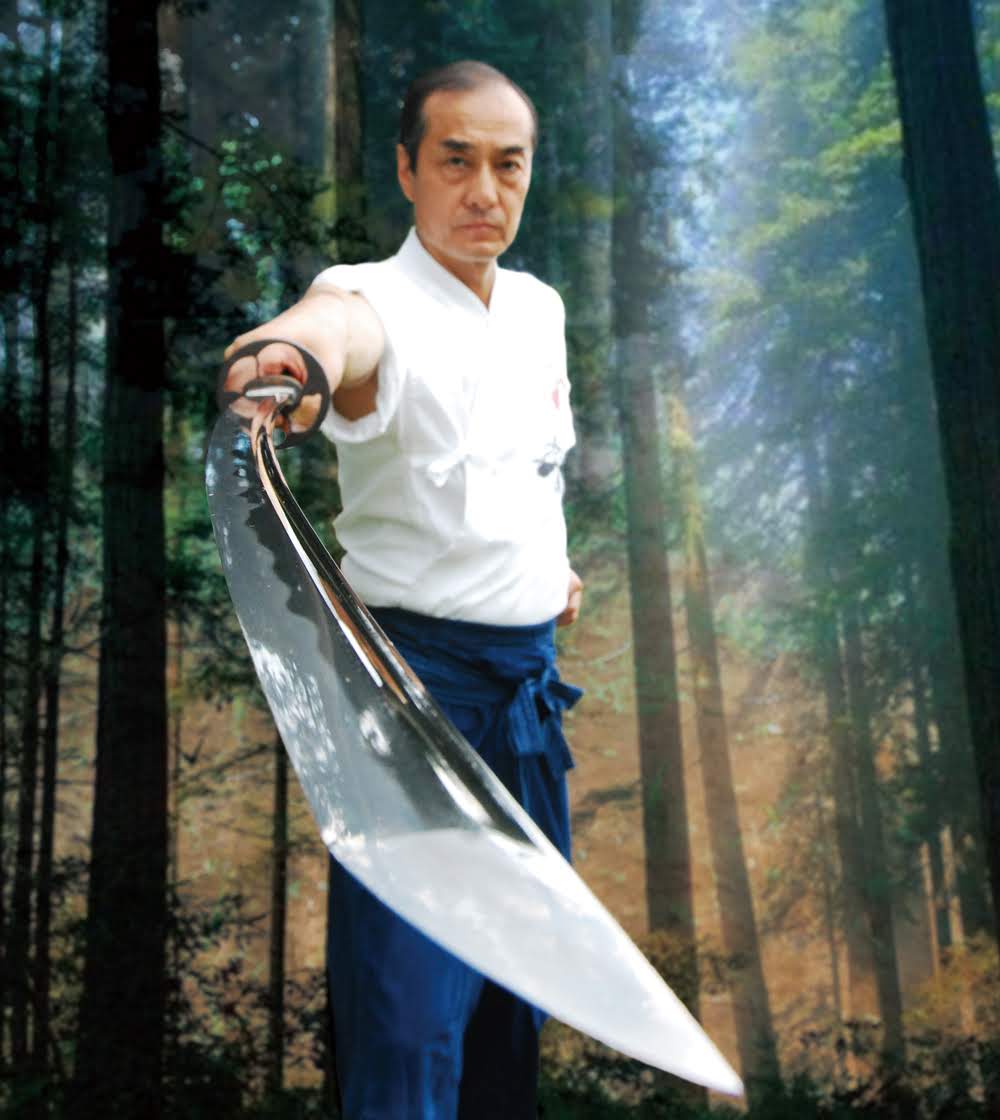
To use a weapon skillfully isn't nearly as easy as it sounds or looks. Watch an iaido demonstration and you'll understand what I mean. For those of you who are unfamiliar with iaido, it's the art of drawing and cutting with the Japanese sword. If you are not intimately acquainted with this venerable art, you'll miss all of the subtleties that make it what it is. It would seem that the swordsman, who usually begins in the position of seiza (sitting on the knees with the feet tucked under the buttocks), simply rises up to one knee, draws his sword, and makes a powerful cut. But there are many other small, obscure movements that are crucial to the correct execution of the technique and these delicate, sophisticated actions must be performed very precisely. Breath, mind, spirit, and physical movement must be in perfect synch. And for some reason, this seems to be more readily seen and felt when one is using a weapon than when one practices only with the bare hands.


Once a student has learned the fundamental techniques and form of a particular weapon, I tell him to perform the form without the weapon! The movements must be as smooth and precise as if they were wielding the weapon. This helps him grasp the relationship between weaponry and bare-handed fighting. After practicing in this way for a time, I tell him to change the “weapon technique” into a valid “empty-hand technique.” This often opens his eyes in more ways than one. He can clearly see the relationship between distance and timing, he can better understand rhythm, and he can see the many ways in which the striking and grappling techniques may be applied.


I once told my most senior student that if he really wanted to learn the essence of timing; if he really and truly wanted to understand it, he should take up kendo. Of course, the same thing holds true for other weapons with which martial arts enthusiasts practice but for reasons of safety, only a select few are suitable for “sparring”, per se. Kendo is the Japanese sport of fencing. But instead of using steel blades, they employ swords made of strong strips of bamboo. Even so, armor must be worn to protect the head, face, shoulders, torso, wrists, and hands from the powerful blows delivered with these bamboo “swords.”


In a kendo match, contestants must keep themselves “centered” as they try to connect to the opponent and feel his spirit and intention. If the opponent's mind or spirit flags for a moment or if he can be caught just as he begins an attack, one must commit oneself fully and strike!


The development of a strong but calm spirit, the real meaning of fully extending your yi (intention, mind) without the slightest concern for your own survival, the meaning of committing yourself fully, understanding the real meaning of distance, rhythm, and timing...these are crucial to the development of real skill but most practitioners of the bare-handed arts find them more than a little difficult to grasp and apply. It is my opinion that these concepts are more easily realized through the practice of weaponry. I don't know why this is true, but it is. And once they are realized through training with weapons they can easily be transferred to empty-hand technique.