TRADITIONAL MARTIAL ARTS

TRADITIONAL MARTIAL ARTS

Sunday, August 24, 2014

BE CAREFUL WITH YOUR WORDS!

By Phillip Starr

Over the decades that I've been involved in teaching martial arts and qigong, I've come to better understand the importance of the words we use and how they impact a student's performance as well as our own. This is something that most teachers (and students, for that matter) rarely consider but I think it's really very important.

For instance, in teaching students to rotate their hip(s) quickly when executing certain techniques (as in the body action of “Rotation”, which is discussed in detail in my book, Martial Mechanics. If you don't have a copy, get off your butt and get one!), I would tell them to “quickly turn” or “rotate” it. This resulted in them making a smooth but rather slow movement and that wasn't quite what I wanted. I wanted the rotation to be smooth and correct but FAST! So, I'd tell them to do it FASTER! That had about as much effect as telling it to the nearest shrubbery. Nada. Same old thing.

Okay...I tried telling them to “snap” the hip. That brought about some improvement but it wasn't quite where I wanted it...yet. It was some time before I tried using the word, “twitch.” And that did it! That word flashed through their skulls (and my own) and suddenly, their hip rotation was right where I wanted it!

And in so far as qigong (or anything else) goes, here's a story:

Many years ago, I was teaching a two-person qigong exercise known as the Unbendable Arm to a large group of students in my martial arts school in Iowa. An old friend of mine (who was then a professor of psychology in Missouri and an avid practitioner of taijiquan) was visiting me. He listened as I finished giving instructions and then asked if he might speak to the students about this technique. Of course, I agreed.

As he talked to them I could see that he was simply reiterating what I had already told them. I wondered why he had wanted to speak to them at all! When he had finished his brief talk, he told them to go ahead and try to perform the technique…and almost all of them failed! This had never happened in one of my classes! I could not understand what had just occurred and asked my friend if he had any recommendations. He laughed and said, “When you teach them, you tell them to just ‘do it’, and they always succeed. They do exactly what you tell them to do because they have faith in you as their teacher. But I told them to ‘try’ to do it. That single word, ‘try’, suggested the possibility of failure…and that’s exactly what they did!”

This was an extremely valuable lesson that I’ve never forgotten. If your mind believes that you may fail, you probably will. However, if your mind does not acknowledge that possibility, then success is assured. And learning to perform this basic practice technique proves the truth of that statement!

The word 'try' suggests the possibility of failure and because failing is almost always easier than succeeding, the mind chooses the path of least resistance. If you want to succeed at something, never use the word 'try.'

There are many others. Instead of using the word “speed” (e.g., “You need more speed in your kicks”...), try using “fast-sounding” words such as “zip.” We hear and use the “speed” so often in daily life that when we hear it in training, our minds tend to more or less ignore it. Another such word is “power.” That's a very common word and really doesn't express the concept of what we're after in so far as martial arts training is concerned. Words like “bang” work much better.

It'll take some time to re-evaluate the words and phrases that you use in your training or in teaching others but believe me, it's worth the effort. It can make all the difference in the world!
Friday, May 23, 2014

DID YOU EVER WONDER...?


      I remember watching a martial arts demonstration many years ago where the instructor informed the audience, which was comprised largely of other teachers, that he and his students would be performing an ancient Japanese martial discipline. He then proceeded with his exhibition, which featured various and sundry forms of punching, kicking, and swordsmanship. To say that his use of the Japanese katana was somewhat flawed would be a very serious understatement; I, for one, was amazed that he didn't cut himself as he whipped the blade around with one hand, flipping it this way and that.
      His empty-hand sets weren't much better. They featured the usual variety of punches, strikes, and kicks, including roundhouse kicks, side snap kicks, and...HOLD ON! ROUNDHOUSE KICKS? SIDE SNAP KICKS? Yep. Little did he suspect that techniques such as these are far from “ancient” and most martial arts enthusiasts would never suspect the truth, anyway. So here's a couple of eye-openers...
      The roundhouse kick, as we know it, didn't exist until the 1950's! That's right. The familiar form of executing the kicks with the thigh raise up parallel to the ground and striking with the ball of the foot was actually developed by an instructor of the Japan Karate Association (he was a classmate of the President of the JKA, Masatoshi Nakayama) in the 50's. It was designed for use in jyu-kumite (freestyle sparring) competition and it has worked quite well in that regard. But this is also why this popular kick is not to be found in ANY of the original Okinawan karate katas; it simply didn't exist!
      The old Chinese forms sometimes used a form of roundhouse kicking that actually bears a closer resemblance to the muay-thai “cutting kick.” The foot in chambered lower and contact is usually made with the top of the instep as the kicks comes in at a rising angle. In my opinion, it lacks the destructive power of the newer Japanese version. But this kind of kick is also very rare in Chinese forms, appearing only in a very few sets of northern Chinese origin. It does not appear in southern kung-fu styles and it is from these styles that most Okinawan karate forms evolved.
      The method of using the top of the instep to strike with a roundhouse kick actually was rather uncommon prior to the development of foot pads in competition. This is because such a kick could easily become a religious experience; if your kick connected with an opponent's elbow or other similar bony protrusions, you'd swear you could see God! When the foot pads came along, competitors saw that they could point their toes and make contact with the tip of the pad to score a point, The pad provided them with up to an extra twelve inches of reach, This led to many instructors actually teaching their students to execute this kick with the instep rather than with the ball of the foot.
      The same thing is true of the side snap kick. Now, there are two ways of executing a “side kick.” One method utilizes a quick snapping movement from the knee (the snap kick), and the other drives the edge of the foot out in a straight line, more or less (the thrust kick). In chambering the side snap kick, the kicking knee points out at an angle. If you're facing north and you chamber your right leg, your knee will point towards a northeasterly direction. The thrust kick is done differently because it is very powerful and requires a strong hip rotation. When you chamber the leg, your knee will be pointed straight ahead (in the same direction that you are facing).
      The snap kick is considerably weaker than the thrust kick and is not to be seen in any of the ancient Okinawan kata. Moreover, the old katas don't include ANY kicks that travel above the level of the waist. The side thrust kick is almost always directed at the knee of the opponent. To kick much higher would expose the groin to a quick counter-attack which wouldn't necessarily require much power!
      Nonetheless, the JKA developed the side snap kick for use in kata competition because it is exciting to watch and allowed for more variety in (kata) kicks than seeing the same old front snap kick performed repeatedly.
      Many shotokan karate stylists broke away from the JKA because of these changes but the influence of the JKA was felt throughout the entire karate community. Taekwondo and Tangsoodo, both of which are Korean arts, were developed from shotokan and subsequently include these peculiar kicks.
      So, there you have it; a short but interesting lesson in the history and development of modern-day karate. And there's more. Much, much more.

Tuesday, April 1, 2014

GOT JIN?


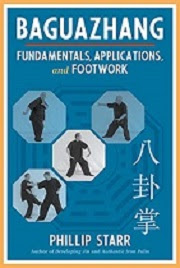
      The little voice in my head wouldn't calm down. “You need to write about the coiling power”, it said. “For future generations, you must write it down.” The nagging was constant but I was hesitant; no one had attempted to write a book about this subject. I had seen it mentioned in a small handful of Chinese martial arts books but the information they provided was insufficient and in many cases, it was just plain wrong. Writing a book on this subject and presenting the information that had been passed down to me by my teacher, Master W. C. Chen, certainly wouldn't make a lot of people happy.
      Sure, I'd seen several videos on the subject that had featured highly-respected and world famous “masters” performing various and sundry training exercises. Some of them had a notion of how this enigmatic power could be developed but their demonstrations were woefully inadequate. The more I watched, the more convinced I became that they honestly didn't know much about the subject.
      I asked my two most senior students what they thought. They told me that they felt that the information needed to be preserved in writing. They were very excited about the project... but I wondered. After all, this is an aspect of training (in the neijia) that really requires a “hands on” approach and a book can't possibly provide that. In days long past, teachers of this arcane art would instruct only a small handful of students at a time. It is my belief that the main reason this special skill has all but disappeared is because the real masters of it became very popular and were eventually swamped with many new students. It simply isn't possible to teach the finer aspects of coiling power to large groups of people. Like I said, it requires a “hands on” approach.
      At the same time, I felt that my students were right. The information did need to be preserved. However, it would likely ruffle more than a few feathers. Some very well-known teachers of the neijia were making truckloads of money through their seminars on coiling power and what they were demonstrating was little more than a vague shadow of the real thing. The real coiling power is very subtle and difficult for the uninitiated to see; these contemporary “masters” made large, overt movements that looked very flowery and beautiful. But they lacked substance; they were all but completely devoid of real power. Their fanciful demonstrations quickly attracted many Western students who were impressed with their “smoke and mirrors” exhibitions. It was, and still is, shameful.
      One of my teacher's best-known classmates was a gentleman known as Wang Shujin. My teacher described him as “very tall and very fat.” Sifu Chen didn't pull punches when it came to descriptions. His classmate was, in fact, over six feet tall (which was very tall for a Chinese person in those days), and weighed more than 300 lbs. Wang eventually taught in Japan where he gathered a very large following. In the main, he taught taijiquan but he also taught a few groups xingyiquan and baguazhang. Several Japanese martial arts enthusiasts didn't appreciate Wang's efforts to introduce neijia to the Japanese; after all, this occurred in the 1950's and memories of WWII were still pretty raw.
     Wang was challenged numerous times by teachers and students of karate and jujutsu but his skill never left him. He remained undefeated. On one occasion, Wang was challenged by two high-ranking jujutsu practitioners. As usual, he readily accepted their offer to “cross hands.” The first man quickly grabbed Wang's arm and was rendered unconscious almost instantly when Wang caressed him with his fist. The other aggressor though he could do better and grasped Wang in a hug from the rear. It is said that Wang, whose arms were pinned to his sides, shook his body as a dog shakes off water. His opponent collapsed on the spot and was rushed to a hospital, suffering from a couple of broken ribs and internal bleeding!
      What Wang had done was to use the coiling power and emit it through his whole upper body. I suppose his foe would have felt as though he'd latched onto a huge blender! Truly, Wang was a master of this art. Such skill is not seen today. The hucksters would tell similar stories but they couldn't possibly demonstrate it. Those of you who know me will chuckle when I say that I decided not only to ruffle their feathers; I'd pluck them! And so I started to work.
I regarded this project to be of the utmost importance. I know this statement isn't going to help me win the “Most Popular Kung-Fu Teacher of the Year” award, but let me say that if any of the neijia – taijiquan, xingyiquan, or baguazhang – aren't practiced with the (genuine) coiling power, they are NOT really neijia and they're no different than any other percussive martial art. And the painful truth is that the vast majority of neijia enthusiasts in the world (including China) - teachers and students alike - have no clue about developing or applying this special power.
      There were many times that I wondered if I'd bitten off more than I could chew. This subject is more than a little difficult to put into writing. To make things even more complicated, I moved to southern China! The photos were done by students and friends in the U.S. and I thought they did a magnificent job. It made me wonder if it was because I wasn't there (as I had been in previous projects) to whine and complain! Adjusting to life in China made things even more difficult and I honestly wondered if this book would ever be completed.
      In the end, I was very pleased with the book. It was the very best that I could do, the best instruction that I could provide without actually being physically present. I'm anxious to see how this book will be accepted by the neijia community.

Sunday, March 9, 2014

HARD vs. SOFT


      Is your style of karate or kung-fu considered a “hard style” or a “soft style?” Most Western practitioners of these disciplines are able to answer this question in a heartbeat. They may elaborate on the subject a bit, but they immediately understand the question and what it implies; “hard styles” rely on the development and application of brute, muscular force while “soft styles” emphasize relaxation, minimal muscular effort, and the utilization of qi (internal power). I remember when the terms “hard style” and “soft style” were first introduced to Western martial arts enthusiasts by the martial arts media back in the 1960's. I'd never heard of these phrases and I asked my teacher, Master W. C. Chen about them. I was astounded when I saw that he was every bit as confused as I was. These appellations have never been used in China or any other part of Asia. They were, as nearly as I can determine, created by the martial arts magazines of the day.
      Some karate and kung-fu enthusiasts elaborate a bit further and explain that “hard styles” utilize techniques that travel in straight lines and “soft styles” promote the use of circular techniques. I've never understood how anyone could accept this terribly flawed explanation and when would ask for some elaboration, the answers I received were almost comical. “We use straight punches”, they would say. I would counter this statement and remind them that the so-called “soft styles” utilize exactly the same type of forefist thrust. Moreover, this type of direct punch employs a (circular) turn of the hips as well as a (circular) screwing motion of the wrist just prior to contact.
      Not to be so easily dissuaded, they would argue that their kicks were directed along a straight path. They would happily demonstrate a front snap kick and a side thrust kick as proof of this. I countered easily and showed them that both kicks travel along arcs (as they must, since they are chambered from the height of the kicker's knee). I would also show them techniques such as sword-hand and backfist strikes, both of which travel along semi-circular paths.
      Even so, they would not be dissuaded. “Our blocking techniques are circular but our punches are straight”, they argued. I had to shrug my shoulders. There's no point in quibbling with a closed mind. Their convictions were based on remarks made in their favorite monthly martial arts publications, so there could be no doubt as to their validity, right?
      You bet.
      These were the same magazines that avowed that “soft styles” such as taijiquan and baguazhang didn't require the application of any muscular effort whatsoever. Many aspiring martial arts masters understood this to mean that any “98 lb. weakling” could easily become an expert at time travel by knocking his larger opponent into next week! The few taiji schools that were available were soon packed to the gills with students and the cash flowed quickly and easily. But the truth got lost in there somewhere.
      Some karateists prided themselves on practicing systems that were touted as being both hard and soft. Goju-ryu is a prime example. “Go” means “hard”, they would say. And “ju” means “soft.” So there you have it, right?
      No, not quite. Like the early practitioners of judo, who believed that the “ju” of judo meant “soft, gentle”, they didn't bother to learn something of the Japanese language and culture. The word “ju” does NOT mean “soft.” Not by a long shot. Rather, it refers to a type of pliability such as we might see with the flexible limbs of a young tree. Push against it and it gives way easily. It does not, however, collapse entirely. When you release it, the limb will snap back to it's original shape. This kind of elasticity is what “ju” refers to.
      All martial arts, from karate to kendo, aikido, kung-fu and kendo underscore the importance of doing more with less. That's a fancy way of saying that one shouldn't use any more (muscular) strength than is absolutely necessary. Ever. A highly skilled practitioner of karate, which is generally referred to as a “hard style”, will perform his techniques with celerity but without excessive brute force. I have trained and socialized with some of the finest karate masters of the last century such as Hidetaka Nishiyama and Seiyu Oyata. Their techniques were crisp and quick, delivered with minimal muscular effort. To the novice, such techniques would appear to be lacking any real destructive power but those senior practitioners who had had the dubious pleasure of being on the receiving end of those techniques knew better.
      At the same time, I have known a great many practitioners of taijiquan who prided themselves on their ability to push a foe some distance. The fact is that their pushing technique was seriously flawed and was more of what I call a”shove” rather than a “push.” And in any case, I've never known a push to end a serious conflict! Taijiquan, as well as baguazhang and xingyiquan (the three classical “sister” styles that are generally referred to as “soft” or “internal”) utilize a wide variety of punching, striking, and kicking techniques that, when applied correctly, are terrifically powerful. But if you're thinking of finding someone who can demonstrate such skill to you, you'd best plan to travel for a long, long time. Such skill nowadays in the “soft styles” is extremely rare, even in China.
      The terms “external style/school” (waijia) and “internal style/school” (neijia) are often used interchangably with “hard” and “soft”, respectively. Again, such phrases are rarely used in China. They were originally coined by a famous teacher of the neijia, Sun-Lutang, back in the 1930's. Some people argue that they actually refer to where a given style originated; those that originated outside of China were called “waijia” and those that were native to the Middle Kingdom (that's China for you rednecks) were referred to as “neijia.” Put simply, this argument is wrong.
      Sun wanted to differentiate between styles that rely on the development of “coiling power” (chansi-jin) and the manipulation of small, inconspicuous, internal tissues and those that focus solely on the use of the larger, overt muscle groups. Such a distinction does, in fact, exist. Most contemporary karate styles do not utilize coiling power at all. However, my research indicates that the early Okinawan forms of karate did. Over the generations, most of this information has been lost or forgotten. However, this would qualify such styles as forms of neijia! That statement probably won't help me win any martial arts popularity contests, but it's true.
So, hard or soft, internal or external, what counts is that you learn to perform your techniques and form correctly. Hard and soft eventually become one. And THAT is where real skill lies.

Sunday, February 16, 2014

DO WHAT YOU CANNOT DO


Do what you cannot possibly do.
Make the impossible possible.”
-Masutatsu Oyama
Founder of Kyokushin karate

      I first heard those words many, many years ago and I took them to heart. Martial arts were my great passion and they remain so to this day. I wanted to push the envelope; to see just how far I could go. I read about numerous masters of times past and determined that I would do what they'd done. After all, they weren't gods; they were men just like me. If they could do it, I could do it.
      Many of you are probably shaking your heads and thinking, “What a fool... That's a fine way to get hurt very badly. Or killed. You were certainly a very foolish young man.” And looking back on those days, I'd have to agree with you. But I wasn't stupid.
      I read about the legendary “arrow catch”, which is an extremely dangerous technique that involves catching an arrow in mid-flight. The legendary “godhand”, Master Masutatsu Oyama, said that of 1,000 students, only one or two would attempt to learn such a technique. And of the 1,000 who set out to perform it, only a couple who be successful. It kind of makes you wonder what happened to the 998 who failed, doesn't it? But I didn't consider that. I was never much good at math, anyway.
      I was still in college and young enough to think that I was invincible; that I could be one of the “one or two” who would succeed. “If they can do it, I can do it”, I thought. One of my students was a very skilled archer who owned a good recurved bow and he agreed to work with me, We spent months practicing together. Eventually, I would face him at the opposite end of a basketball court. An arrow-net was placed behind me to prevent arrows from striking the walls of the old college gym. Just as he released the arrow, I'd pivot and catch it.
      This isn't something that can be accomplished after only a couple of weeks of practice. I may have been foolhardy but I wasn't stupid. We started out by having me simply stand off to one side and observe how quickly the arrows passed by me. Then I would reach out and try to grab them. It was a slow and gradual process that required some considerable time. I would go on to demonstrate this technique at several demonstrations.
I also wanted to test myself by breaking large stones. Starting with very small ones, I eventually succeeded in cutting a 25 lb. stone with my sword-hand. My hand shook uncontrollably for three days but I was pleased that I had accomplished what I'd set out to do. I continued to train until I could shatter a “paver” brick (which is a little more than an inch thick) with my fingertips and split a coconut with a single blow.
      Now, I'm not bragging. I've never been one to indulge in self-aggrandizement. I've never had much time for people who do. The point of this short essay is simply this; although what I pushed myself to do was often very dangerous, it had a very profound impact on my mind and spirit. Martial arts isn't just about learning some exotic forms of kicking and punching; it's also about pushing yourself beyond what you perceive as your limits. It's about setting goals and then going beyond them. If you mindlessly practice a few punches and kicks once or twice a week, you're not really practicing martial arts; you're dancing. Without proper spirit, martial arts devolve into little more than some nifty-looking calisthenics.
       Certainly, I'm not suggesting that you run to the nearest sporting goods store and purchase a good bow and a handful of arrows or drive through the countryside until you can find a 20 lb. stone. After all, techniques such as the arrow-catch are fraught with danger and anyone who aspires to do them must train very carefully and gradually. You must push yourself slowly, step by step. Remember that when I trained to perform these things I was young, in excellent physical condition (I suppose my mental condition could be called questionable), and I had practiced martial arts for a very long time.
      What I'm suggesting is that you strive to push yourself past your “limits.” After all, it's YOU who set those limits in the first place! It's going to take some considerable work and sweat to get to the very edge of your limits... and then it'll require more than just sweat to go beyond them; it's going to take time, guts, and belief in yourself.

Wednesday, February 12, 2014

THE TRAINING UNIFORM


      Many traditional martial arts require that students wear a special practice uniform. The names for these numerous forms of apparel often vary from one discipline to another but there are certain common elements that are found in all of them:

  • They tend to be what we refer to as “rather baggy” and “loose fitting.” Stylish looks means nothing in a training hall where efficiency is the key word. Clothing that is tight or restrictive is not particularly conducive to quick, smooth movements.

  • They are devoid of items that may result in injury to one's training partner or oneself. Zippers, snaps, and hard buttons are not to be found on traditional martial arts uniforms. And anyway, zippers and snaps simply didn't exist at the time these uniforms came into existence. In fact, several types of traditional uniforms are versions of ancient streetwear.

  • They are usually made of fairly rugged material that will stand up to rigorous physical training. This especially true of the grappling arts.

  • Students are expected to keep their training uniforms clean and in good repair at all times.


      In other articles I have written about the evolution of various training uniforms; in this chapter I'd like to discuss why I feel that wearing the proper uniform is an important part of your martial arts practice.
      As a lifelong practitioner of the Chinese martial arts, let me begin by admitting that except for the grappling art of shuai-jiao, there is no such thing as a standardized kung-fu uniform. I currently reside in southern China and martial arts enthusiasts generally wear the same attire that they have always worn for martial arts practice; their street clothes!       
     Some wear what are referred to as “Tang clothes” (so named because they were popular during the Tang Dynasty) but by and large, they wear sports shirts or t-shirts and everyday trousers. Nothing special.
      Consequently, many Western kung-fu schools disdain the wearing of any kind of formal training attire. I think this is a serious mistake that adversely affects their training. Participants dress casually and, because how we dress affects how we behave, they tend to approach their training in a rather casual manner. This isn't particularly contributive to the development of a strong (martial) spirit or maintaining a well-disciplined class.
      Moreover, street attire was never intended to hold up to the rigors of a spirited martial arts class. Shirts and trouser are easily torn and ruined and their buttons, snaps, and zippers can easily result in injuries to both participants. So, instructors are left with one of two choices; they can either conduct a proper class and watch as their student's clothes are gradually reduced to shredded scraps, or they can tone down the training and ensure that their students (and their wallets) remain happy.  The latter is almost always the choice that is selected.                  
      Training uniforms were developed over many years because the martial arts practitioners of times past understood that ordinary street clothes were simply not suitable for training. Also, a consideration that is often overlooked is the fact that in most martial arts schools, all training uniforms look the same...or very nearly so. This is a policy that is often strictly enforced. Students must understand that they are all equal and they are all “related”, as it were. They are members of a martial arts “family.” Thus, they all wear the same uniforms.
The training uniform gives the new student the feeling of authenticity; a feeling of, “Now I'm really doing it!” He becomes enthusiastic about training. This is exactly why many martial arts schools include a uniform with a new student's first tuition payment. It has a considerable impact on the student's attitude about his training and his place in the school.
      It is for this same reason that I tell my students to wear their uniforms when they practice at home. Putting on the uniform reminds them that they are “really doing it” and they are less likely to slack off or cut their training period short when they get a little winded. They try just a little harder because of that special uniform. However, sometimes they are unable to wear the full uniform. I tell them that in such cases, they should at least wear the trousers. And it helps. Training without the uniform just isn't the same.

Saturday, February 8, 2014

DON'T THROW THAT PUNCH! HAND ME THE SCREWDRIVER!


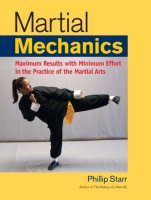
      MARTIAL MECHANICS was my second book. I'd always wanted to write a book like this; explain the principles of physics and kinesiology as they apply to martial arts technique and movement. It was great fun to write! I decided that I'd write in the same that I'd actually teach (well, except for some of the expletives) because I'm tired of the usual sterile approach that reads like a math textbook. That's about as interesting as watching paint dry on a storm fence.
My editor didn't appreciate some of the humor -like the line about squeezing the anal sphincter when you execute certain movements, where I told the reader to imagine training in a prison shower... that line was unceremoniously removed. :-) I had to argue with copy editors about leaving in a lot of the humor. They said no one would know what a “klick” is...I told them not to worry. Most people would understand. If they didn't, they could bloody well ask a friend.
      I'd taught these principles so many times that the words came easily. The photo sessions were tough, though. I learned a lot about what editors like in terms of photos for a book and we had to do many re-shoots. It was really a LOT of work!
      When the book came out, we had a few – very few - people (mostly high school teachers) whine that the physics were faulted. I contacted a couple and asked exactly what they meant. One argued that the words “power” and “force” as I'd used them, were incorrect in terms of classical physics. I reminded him that I was aware of that but I was writing for people who'd probably never studied classical physics...not for a class of science students! That settled the matter. Another critic (in the UK, on Amazon in the UK) didn't like my use of “American humor.” I figured he needed a laughter enema.
      On the whole, the book was very well received and many people wrote to me about how the book had actually changed the way that they practiced their martial arts. I was very happy to hear that my efforts had helped them. I'd perused a couple of other books on the subject (I won't mention their names here); one was fair but incomplete and the other was seriously flawed. I wanted mine to be as accurate as possible. To describe some of the body actions was trickier than I'd anticipated.
All in all, the book has done very well. My thanks to everyone who purchased a copy. I hope it's been of help to you in understanding how to improve your technique!