TRADITIONAL MARTIAL ARTS

TRADITIONAL MARTIAL ARTS

Monday, April 3, 2023

CLEAN SWEEP...

by Yang Xuangxing
 
The lowly foot sweep...it rarely gets the attention it deserves. The foot sweep, as used in karate and gong-fu, is a bit of a different animal than that which is used in arts such as judo; in the grappling arts, the sweep is usually employed to throw the opponent to the ground and score a point. In karate and gong-fu, it is used primarily as a means of disrupting the opponent's balance long enough to employ an effective strike or kick.

Although the sole of the foot (the bottom of the instep) is usually employed, many Chinese styles utilize the top part of the foot where it joins the lower leg (forming an “L” shape) as a “foot hook.” The sweep, done with the sole, is applied just above the ankle and although it sounds easy enough to do, it really requires considerable training. I would have students practice with a partner who held a staff vertically, with one end planted firmly on the floor. They had to sweep it with enough power that the staff swung up horizontally. After 25 sweeps with each foot, they learned quickly exactly what part of the foot is to be used. Hitting with the inner edge of the foot is a religious experience...you'll swear you saw God!


I also told them that I knew of people who practiced their sweep against a 55 gallon drum. Then several weeks later during sparring, a young senior student who was something of a “hot dog” was paired to spar with my oldest pupil, who was about 62 or so. The youngster charged in with a driving punch and the older fellow caught him with a sweep that was so powerful, both of the younger guy's feet left the ground and he crashed to the floor. Undiscouraged and very red-faced, he got back up and squared off with the older man again. When he thought the moment was right, he moved in again...but his timing wasn't as sharp as he'd thought. A second sweep, even stronger than the first, sent his backside into the air. It was as though he'd been clipped by a minivan!


After class, I complimented my older student on his sweeping technique. “How did you develop such a strong sweep”, I asked. He chuckled and said he'd practiced with a 55 gallon drum and when he was able to move it with his sweep, he began adding water to it...it was 1/5 full and he could still move it! Small wonder he sent a 160 lb. opponent into the air! I doubled over with laughter and I was amazed at his dedication and hard training!


When I used to compete back in the 60's and 70's, foot sweeps were allowed, so long as they contacted the “boot” area of the ankle and lower leg. Many fighters specialized in this technique. One of the best was from England, a shotokan stylist. I felt sorry for his opponents...he was legs from the armpits down and he used those long legs to sweep his opponents and then deliver punches to them before they'd even hit the ground!


In actual combat, the sweep can readily be applied to the sides of the knee and may cause severe damage to the joint. In some forms, sweeps are “hidden” in the form of kicks. The well-known “crescent-kick” is often eschewed by many instructors who claim that it's just too slow and obvious to be truly effective in combat. And they're right! So, why is it even included in the form...? Certainly, our martial arts forefathers (who used the various movements of the form in actual self-defense) would have recognized that, wouldn't they? Yes, they would and did.


According to my gong-fu teacher many years ago as well as Master Seiyu Oyata (10th dan, Okinawan karate), the “crescent kick” is actually intended as a sweep. The target areas are the lower legs, ankles, and knees. But the “kick” (sweep) is practiced much higher to foster the development of strong hips, which are essential for effective sweeping. Makes you stop and think, doesn't it?


Sunday, April 2, 2023

THE LARGEST OBSTACLE

 by Phillip Starr

     Like most martial arts teachers, I frequently subject my students - all of them - to various and sundry "tests" from time to time.  Administered without their knowledge (if they knew they were being "tested" the results would be tainted), these small and sometimes seemingly insignificant character tests allow me to look into their personalities or, as my teacher would have said, "see into their hearts."  This helps me to better understand each of them; how and why they learn or fail to learn, why they think and behave as they do, what they fear, what they believe (especially about themselves), and so on.  This enables me to be a more effective teacher.

     Over the many years that I have been involved in teaching, I have found one particular obstacle that is more insidious than all of the others combined.  It has ruined careers, destroyed countless relationships, and stunted the growth of many martial arts enthusiasts.  Of all the obstacles that are encountered by those who choose to follow the martial path, it is the largest and most dangerous.  It is also often the most difficult to see.

     And what might this obstacle be?

     Ego.


     Think about it.  Whenever someone fails to achieve something, they often think or say, "I can't do this."  The actual translation of that thought or statement is, "I won't do this."  Now, the why of that statement can vary considerably.  Some of the why’s would include:

· I don't really want to do it.

· I'm above doing that.  Doing that is beneath me.

· I'm too embarrassed to try.  Others will laugh at me.

· I'm afraid to try it but I don't want anyone else to know that I'm afraid.

· I don't want to put out that much effort.

And so on.


     Some time ago, I told my students at the end of class that we needed to clean up the training hall.  It needed to be dusted, vacuumed, and so on.  I watched to see who would pitch in and help.  Quite frankly, I was more than a little disappointed to see who didn't!


     On another occasion, a former student of mine went to the school of another martial arts teacher.  His ego wouldn't permit him to don a white belt and become a beginner again.  Instead, he behaved like a customer in a fast-food burger joint; he wanted it “his way!” He informed the instructor what it was that he wanted to learn and he fully expected the instructor to comply with his request!  Naturally, the teacher, who is a dear friend of mine, declined his request and when I heard of this incident I was very embarrassed and ashamed.


     I've met countless martial arts teachers over the years, many of whom would make the aforementioned pompous student look rather humble.  It has been my experience that those who insist on being addressed as "Master", "Grandmaster", "Great Grandmaster", "Hanshi", "Soke", "Grand Ultra-Cosmic Poohbah", and all other manner of eloquent titles...aren't.  Their egos are strangling them. I've met and trained with some of the greatest martial arts teachers of our time - Hidetaka Nishiyama, Seiyu Oyata, W.C. Chen - and none of them were ever addressed as "Great Master So-and-So."  Known simply as "sensei" or "sifu", they were exceptional men whose skill was of the highest caliber.  They weren't interested in titles; their sole concern lay in the development of real skill and in imparting that skill and knowledge to others.


     Another fine example of such a teacher was my friend, Sherman Harrill.  He had trained in Isshin-ryu karate under the founder, Tatsuo Shimabuku, and had spent decades perfecting his skill and researching what he had been taught.  For years, "Sherm" wouldn't wear a colored belt at all.  He'd wear a karategi (karate uniform), but no belt.  I used to harass him about it and he ignored me until I mentioned that a uniform without a belt just looked plain dorky.  I must have struck a nerve because shortly after I made that remark, he began wearing a belt. But...he insisted on wearing a white belt!


He said that he was really just a beginner and so began another round of me harassing him about not wearing the appropriate colored belt.  It took several years of loud complaining before he finally acquiesced and put on a proper black belt. Sherm didn't know the meaning of the word "ego."  I don't believe I ever heard anyone refer to him as "master" and I shudder to think what he might have done to who anyone who did.  Sherm cared nothing for titles.  Or belts (obviously).  What he cared about was knowledge and skill and he'd go to whatever lengths he needed to endure in order to learn.


     Another excellent example is that of another close friend, Mr. Ron Christenham. Known far and wide simply as "sensei" (I imagine there are many people who don't know his real name - even other martial arts instructors, including me, refer to him as "sensei" and everyone knows exactly who we're talking about), he exemplifies what a genuine martial arts teacher should be.  He doesn't try to do it; he has simply become it.  His unassuming, humble, and polite manner conceals his remarkable skill and extensive knowledge of the arts.  He is the perfect antithesis of the sort of teacher who revels in being called "master", grandmaster", or other high-flying titles.  He doesn't strut around with a puffed-out chest and his uniform is not adorned with patches that proclaim him as "instructor", "master", or anything else.  But if you were to walk into his aikido class, there would be no question as to the identity of this man.  You can feel his spirit from across the room!


     Martial arts are much more than learning some fancy punches, kicks, and throws. They’re more than a pretty uniform with patches all over it (I've seen some uniforms that resemble colorful maps of downtown Los Angeles) or black belts with half a dozen hash marks on one end.  At the end of the day, martial arts is learning about yourself - good and bad - and striving to perfect your character.  That means laying ego aside and that can be a very, very difficult thing to do.  Just when you think you've finally done it, the ego creeps up from a blind spot and returns. 


Do you feel proud that you've finally eliminated ego?  Then you'd better look again... Have you ever cleaned the training hall when no one else was around or watching you? Have you ever (or would you) clean the toilets?

     Remember, character is what you do and how you act when no one else is watching. Ego strangles the development of character.  And everything else.  I have some former students (and some still consider themselves students although they never manage to attend class) who are truly “unteachable”.  I say that they are beyond teaching because they won't jump into class with everyone else and pour sweat.  They don't have the beginner's mind that thirsts for knowledge and skill.  They are unwilling to push themselves (especially in front of others) and admit their weaknesses.  If they will not own up to their weaknesses and failings, how can they hope to overcome them?


     Take time for self-introspection.  You might be surprised at what you find.


Saturday, April 1, 2023

THE FIST AND THE SWORD

 by Phillip Starr

Students are sometimes confused when I tell them that if they really want to improve their bare-handed skills they must learn traditional weaponry. I tell them that empty-handed training will get them to a certain level but they cannot pass beyond that level unless they learn to use these outdated weapons of yesteryear. In fact, they must not only learn to use them; they must train assiduously with them and acquire a high level of skill!

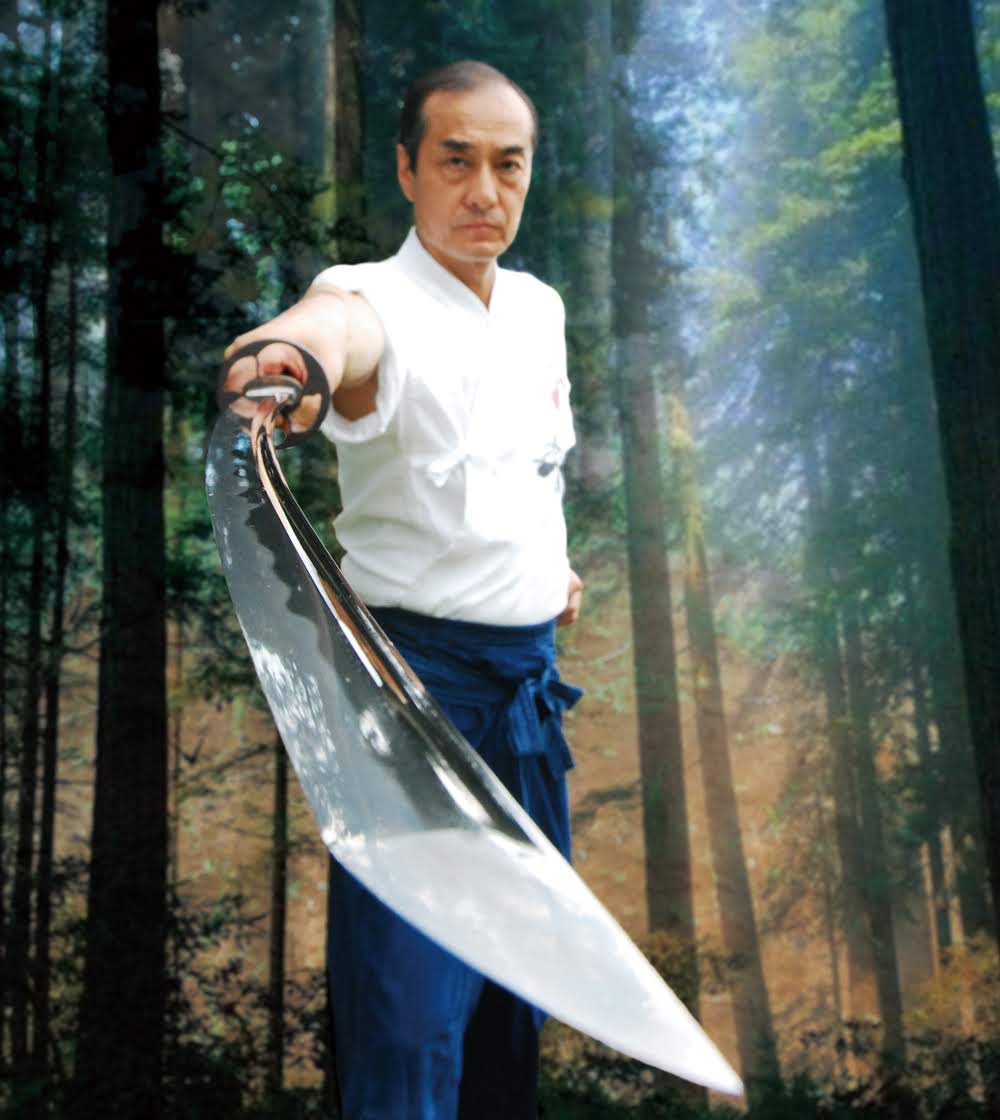
To use a weapon skillfully isn't nearly as easy as it sounds or looks. Watch an iaido demonstration and you'll understand what I mean. For those of you who are unfamiliar with iaido, it's the art of drawing and cutting with the Japanese sword. If you are not intimately acquainted with this venerable art, you'll miss all of the subtleties that make it what it is. It would seem that the swordsman, who usually begins in the position of seiza (sitting on the knees with the feet tucked under the buttocks), simply rises up to one knee, draws his sword, and makes a powerful cut. But there are many other small, obscure movements that are crucial to the correct execution of the technique and these delicate, sophisticated actions must be performed very precisely. Breath, mind, spirit, and physical movement must be in perfect synch. And for some reason, this seems to be more readily seen and felt when one is using a weapon than when one practices only with the bare hands.


Once a student has learned the fundamental techniques and form of a particular weapon, I tell him to perform the form without the weapon! The movements must be as smooth and precise as if they were wielding the weapon. This helps him grasp the relationship between weaponry and bare-handed fighting. After practicing in this way for a time, I tell him to change the “weapon technique” into a valid “empty-hand technique.” This often opens his eyes in more ways than one. He can clearly see the relationship between distance and timing, he can better understand rhythm, and he can see the many ways in which the striking and grappling techniques may be applied.


I once told my most senior student that if he really wanted to learn the essence of timing; if he really and truly wanted to understand it, he should take up kendo. Of course, the same thing holds true for other weapons with which martial arts enthusiasts practice but for reasons of safety, only a select few are suitable for “sparring”, per se. Kendo is the Japanese sport of fencing. But instead of using steel blades, they employ swords made of strong strips of bamboo. Even so, armor must be worn to protect the head, face, shoulders, torso, wrists, and hands from the powerful blows delivered with these bamboo “swords.”


In a kendo match, contestants must keep themselves “centered” as they try to connect to the opponent and feel his spirit and intention. If the opponent's mind or spirit flags for a moment or if he can be caught just as he begins an attack, one must commit oneself fully and strike!


The development of a strong but calm spirit, the real meaning of fully extending your yi (intention, mind) without the slightest concern for your own survival, the meaning of committing yourself fully, understanding the real meaning of distance, rhythm, and timing...these are crucial to the development of real skill but most practitioners of the bare-handed arts find them more than a little difficult to grasp and apply. It is my opinion that these concepts are more easily realized through the practice of weaponry. I don't know why this is true, but it is. And once they are realized through training with weapons they can easily be transferred to empty-hand technique.


Friday, March 31, 2023

CULTURE OR COMBAT?

 By Phillip Starr

I believe that in order to truly understand a given martial discipline and perform it correctly, one must have a firm grasp of the culture that gave it birth. This will necessarily involve some substantial study as well as introspection, which is something that many (perhaps most) martial arts devotees loathe. But just as the various punches, kicks, and/or throws belong to a given martial form, so the does culture from which it comes. And to truly understand the essence and spirit of that martial art, you must likewise understand its mother culture.

There are those who argue that understanding the culture isn't at all necessary, or even important. Most of them will assert that the purpose of the art is self-defense; it was/is intended for combat. Period. It's a rather shallow approach to such a deep subject (as martial arts) but nonetheless, it's the position taken by many practitioners (consciously or unconsciously). Such people can never truly understand the spirit of their chosen art and may very well be doing it incorrectly as a result.


I'm not necessarily inferring that you need to spend time living in the country/culture from which you art came, but you need to study and absorb the culture as best you can. This is something I realized when I lived in China for 3 years. I had spent more than 50 years training in Chinese martial arts and I figured I had it all sorted out. Not so. There was a lot more to Chinese culture than I had ever imagined and my exposure to it changed the way I practice my kung-fu.


As Westerners, we tend to “Americanize” (or “British-ize”, or whatever else) the manner in which we see, understand, and consequently practice, the martial disciplines of the East. It's only natural for us to do so and it's also true of Eastern folks who take up Western activities, whether it's baseball or anything else. And it actually changes the way in which we (and they) practice said activities.


Learning to speak some of the language of the culture in question is very helpful. You don't need to become fluent, but being able to converse on a very basic level with people who are native to that culture is very useful and conducive to really understanding the culture. Samuel Ichiye Hayakawa, a Canadian-born Japanese gentleman who served as president of San Francisco State University and later became a U.S. senator, was a linguist who made a statement that has stuck in my mind ever since I read it in his book,, “Language in Action.” He said that we cannot conceive of things for which our particular language does not have a word(s); we are, essentially, hindered in our mode of thinking by the language we speak! I have found this to be true. So, by learning other languages we not only enable ourselves to speak to foreigners; we expand our minds!


To really understand the culture of a country and why they do what they do, I think it's necessary to learn something of the language because then you'll learn how they think! And that will impact how you see and practice your chosen martial art.


Wednesday, March 29, 2023

ABSORB WHAT IS USEFUL...

 by Phillip Starr

One of the very worst pieces of advice ever given to the martial arts community at large came from the lips of Bruce Lee.

"Absorb what is useful,

Reject what is useless,

Add what is specifically your own."


Determining just what is useful and what isn't is quite a daunting task and one that should be examined closely. After all, a goodly number of today's so-called "mixed martial arts" crowd as well as followers of numerous eclectic martial ways state very clearly that traditional martial arts aren't entirely applicable to modern combat or combat at all. They believe that numerous techniques that are taught within the traditional martial arts either don't work very well or, in some cases, not at all. This, they say, is why they have chosen to follow their "own paths."


Executing a correct reverse punch, front snap kick, kotegaeshi, or o-soto-gari is a pretty daunting task for most raw beginners who have had little or no previous martial arts training. The new student can spend hours working on any one of these techniques for a whole month and it still is practically worthless in a real fight. The reason why is obvious; to develop any technique so that it is truly usable requires a great deal of practice over a period of time! There are no short cuts. My teacher said that developing effective technique is like making tea. It can't be hurried and any attempt to do so will only ruin the drink.


It would be easy but very premature and terribly foolish for the novice to simply dismiss these fundamental techniques as being "useless." The same holds true for other, more advanced techniques that he or she will eventually learn. I'm sure that you've encountered techniques that just didn't work at first. I know I have. Still do. But with patience, some introspection, and lots of practice you've been able to see how they should be done, where your mistakes were, and suddenly they become functional!


When you learn a technique that doesn't seem to work well for you, ask yourself, "why?" What are you doing wrong? Sometimes the error lies in the physical execution of the technique but sometimes it is hidden in a less obvious place. Maybe it's your timing that's off - and that can be indicative of a mental/psychological error or block of some kind, can't it? Perhaps it's your approach to the application of the technique or your approach (physical, mental, or even spiritual) towards your training "opponent." Regardless, the error is thine. Find it and correct it. Sometimes it's the finding of the error that corrects it.


To say that techniques of the traditional martial arts are not effective (in self-defense) is a blatant display of one's own ignorance, and perhaps, one's unwillingness to put in the required practice (which is a nice way of saying "lazy"). In days long since past, professional warriors (e.g., policemen, soldiers, bodyguards, and their teachers) relied on these arts for their very survival. Back then, it was pretty easy to determine if a given technique worked. If it didn't, you died. Those who developed techniques that didn't work took their failures with them to their graves. For the most part, we'll never know what they were.


The techniques that did work are still with us to this day. If they didn't work, they would have been buried long ago. So, to say that the surviving traditional techniques don't really work is, in my opinion, a statement made by someone who has never learned genuine traditional technique...or who is unwilling, for one reason or another, to put in the time and training required to develop effective technique.


Beginning piano students dare not say that the classics are worthless and no longer functional! The masters who contributed to the creation of the traditional martial disciplines are our Bachs, Beethovens, and Mozarts.

To truly understand a technique and how it should be performed correctly requires at least 10,000 repetitions. In karate or kung-fu this isn't terribly difficult, considering that you can easily practice 100 punches each day. In 100 days you should be able to perform the technique correctly, more or less. That doesn't mean it can't be improved, though.


But that's not the same as making it workable. To be able to perform a technique effectively in combat requires much more practice. You see, the effectiveness of a given technique, whether it's a punch, a kick, a joint twist or throw from aikido or judo...involves much more than just being able to perform the physical aspects of the technique correctly. Much. More.

Back when I trained in forms of Japanese karate, I could not, for the life of me, get a roundhouse kick to work. Actually, it took MONTHS before I figured out how to do it correctly. I guess I just had a mental block and I couldn't imagine how to do it...but once I was able to throw a roundhouse kick, I couldn't figure out how such a kick would ever be useful in fighting! I suppose Mr. Lee would have told me to reject it because, as far as I was concerned, it was pretty useless...


Then came Baguazhang. At first glance, this art seems to have about as much in common with combat as a fish does to a bicycle. It would have been all too easy to simply toss it away as being some sort of pointless, flowery, Chinese bilge water. But I didn't. I stuck with it and studied it...in depth. I examined it carefully, examined myself, examined its strange footwork and body movements...and I practiced and then when I was sick of it, I practiced some more. And when I had problems making it work (which was pretty much all the time, at first), I stayed with it and figured out WHY I was having problems.


In any given martial discipline, at least a decade (or more) is required if one wants to truly understand the art. The problem is that most Westerners don't want to spend that much time in training. They want "instant martial arts." We're accustomed to having "instant food" (which isn't really food), "instant entertainment", and now we want "instant martial arts." But there isn't such an animal...never was, and never will be.


So, rather than absorbing what you find immediately useful and rejecting what you think is useless, just ABSORB.


Tuesday, March 28, 2023

WUJI

 by Phillip Starr

At the beginning of a Taijiquan, Xingyiquan, or Baguazhang form, there is a time when the practitioner stands still, seemingly doing nothing. This is actually a posture known as “Wuji.” I consider it to be one of the most critical, if not THE most important posture of the set. Just what it and what does the word mean?

Wuji (無極)"limitless; infinite" is a compound of “wu”, which means "without; not have; there is not; nothing, nothingness" and “ji”, which translates as "ridgepole; roof ridge; highest/utmost point; extreme; earth's pole; reach the end; attain; exhaust". In analogy with the figurative meanings of English “pole", Chinese “ji” can mean "; geographic pole, direction" (e.g., four corners of the earth; the ends of the earth).


According to Taoist philosophy, wuji is what existed prior to the creation of yin and yang (negative and positive polarities, respectively). It gave birth to yin and yang (maybe this is referring to the “big bang”) and consequently, the 10,000 things (in old Chinese language, the term “10,000” refers to a number that is limitless).


But what does this have to do with practicing a martial discipline? In the beginning of each set the mind is to be calmed and the body must relax (the correct Chinese term is “song”). Tension is consciously released and allowed to (figuratively) pour out the soles of the feet and into the ground, This sets the tone for the remainder of the form, which is why I place such importance on it.


At this point, with the mind calmed, the breath dropped into the lower abdomen (dantien), and the body properly relaxed (remember, it is “song” as opposed to being what I call “damp rag” relaxed), there is (great) potential. And that's how I see Wuji; it contains POTENTIAL, which is something that cannot be weighed, measured, or held in the hand. And this potential gives birth to yin and yang (which also can't be seen or measured because they are not “things”; they are abstract constructs). Any unnecessary tension – mental or physical – will block much or all of the potential contained within the posture. Relax and let the form begin itself...