TRADITIONAL MARTIAL ARTS

TRADITIONAL MARTIAL ARTS

Wednesday, February 8, 2023

COMFORT ZONES

 by Phillip “Pete” Starr

This article likely won't make me many new friends, but here goes anyway...

There is a saying that tells us, “Comfort zones are very comfortable places, but nothing ever grows in them.” Most of us will readily agree with this statement but do we consider just what it implies? As human beings, we prefer comfort to discomfort and pleasure rather than pain. That's only natural. But as martial artists, we must often lay our preferences aside...

Comfort zones come in two parts; physical and psychological. The physical comfort zone is one wherein you feel physically comfy...warm and cozy and all that. There's no pain, no strain or discomfort. And as human beings, we tend to prefer that.

The psychological comfort zone is one wherein you are familiar with your surroundings (including people) and the activities that occur there.

But training in martial arts is a bit different.


As we engage in training, certain postures or movements are often very uncomfortable and even downright painful. Have you ever considered that sometimes it's supposed to feel that way? Over the years that I have been involved in teaching martial arts, I've encountered countless people who complain that “I can't do this movement because I have a bad back/trick knee/toothache/insert one ailment or another here...” To me, most such statements are just so much extra baggage that they bring to class. It's going to weigh them down and hold them back, maybe even stopping their progress altogether.


Now, I'm not saying that you should be foolish and worsen a given condition but...

I remember a karate classmate of mine named LeRoy Fulmer. I'll never forget him. He was a very strong young man of about 16 yrs. when he broke one of his legs (not as a result of training). But he wasn't about to let that stop him. He'd show up for class on crutches, somehow manage to get into his karategi, and sit on the sidelines and watch as we were put through our paces. He'd practice the punches and blocks as he sat there. Every. Class. As soon as the cast was removed, he'd limp through the kata (even though he couldn't yet kick with one leg). This actually enhanced his recovery time and he was soon training normally again!


I have a herniated vertebra in my lower back. When it occurred, the pain was unbearable, radiating all the way down my leg. But I never stopped training (although it did slow me down for a bit) and with the help of proper diet/herbs, the condition improved and no longer bothers me at all.


While in China, I suffered a stroke. When I regained consciousness, I was in a Chinese hospital, unable to walk and I could hardly even speak coherently. My first thoughts were about how this might affect my training. I resolved to be able to walk and train normally again! This stroke was NOT going to stop me and end my progress! And so I began, moving very slowly at first and then gradually it became easier (over months of daily practice). When I could walk again, I began practicing taijiquan. This was extremely uncomfortable physically and even more so mentally. But I persevered. It would have been easy to give up and stay in a more comfortable place, but I've never been one to be satisfied with that. Progress was very slow and often painful. After two years, I was almost 100% recovered. To this day, I persist in moving forward. I want to be BETTER than I was before the stroke! And I'll get there.


I've had students who had lost an arm or a leg. They never allowed that to stop them from training. A friend of mine, Mr. Tony Brown, is a very well-known and respected teacher of Hung-Ga kung-fu...and he has only one arm. But his skill is very high! He didn't use his “handicap” as an excuse or extra baggage. It is what it is, and he continues to train and teach to this day.


Some people argue that they can't stretch because of whatever, and they tell me that vigorous stretching isn't really necessary or even particularly helpful, anyway. Some have even argued that stretching is actually counter-productive to progress in a given martial art. To me, the translation is, “It's uncomfortable and I don't like to do it.” Many people (probably most) find standing in zhan-zhuang (stake standing) postures to be quite painful. Oftentimes, they'll then creatively come up with a reason(s) why they can't (or shouldn't) do it... same translation.

At the same time, train smart. Train hard, but not foolishly. And never haphazardly. However, be aware of the pitfall of the Comfort Zone.

You have to have a goal. Without a goal, you don't know where you're going and a compass won't help. So what's bigger, your excuses or your goals? Don't stunt your own growth by staying in a warm, fuzzy place...


Tuesday, February 7, 2023

AT WHAT PRICE?

 By Phillip Starr

Over the decades that I've been involved in the martial ways, I've watched as many of its traditions have been cast aside (or ignored) by many contemporary teachers and students (largely Western). This is, I feel, a shame because there are real reasons for certain traditions. We Westerners often tend to look down on such things as having little, if any, real value and the times in which we live don't seem to hold things like tradition in very high regard. Sadly, I think this has contributed considerably to the deterioration of the martial ways.

In our quest for what's “new and improved” and what we believe is “practical and realistic”, we are losing the real spirit of the martial arts. And much more. I used to tell my students if all they were interested in was self-defense – something that was new and improved, and practical - they should buy a firearm. There's no centuries-old traditions for this device and it is very practical. No argument there!


But what we do isn't merely for self-defense; it's an ART that dates back hundreds of years. There are actually valid reasons for many of the “traditions” but they're hard for the casual observer to see. But they're important and some of them contain what we might call “secrets.”


Take iaido (the art of drawing and cutting with the Japanese sword), for instance. It looks simple enough to do; you simply grasp the scabbard with your left hand and draw/cut with your right, right? No. It isn't nearly that simple. For example, the hakama (what looks like a long skirt worn by practitioners of several traditional Japanese martial arts) must be worn and tied just so. “Why?”, many Westerners would ask. “It's just part of the training uniform, after all.”


Actually, it's much more than that; the cloth cords that are used to ties it round your waist are actually used to SUPPORT the sword! If they're worn incorrectly, the sheathed sword can easily slip into an unsupported position, making it difficult (and slow) to draw. Back in the day, that would mean the difference between life and losing important body parts. The tradition of donning the hakama (which can take more than a year to learn to do properly) is actually a secret to acquiring real skill in the art. Who woulda thunk? Certainly not a Westerner.


I encourage you to study the traditions of your chosen art and strive to find out the WHY as well as the HOW.


Monday, February 6, 2023

A MATTER OF KOKORO

 by Phillip “Pete” Starr

When facing an opponent, whether it be a contest or an actual conflict, what is your ultimate goal? Of course, most people will answer, “To win.” That's understandable. However, according to the famed Japanese martial arts master, Hino sensei (who I met in 2016) as well as numerous masters of times long past, such desires must be eliminated if one aspires to genuine mastery.


The Japanese word “kokoro” is known as “xin” in Chinese and is generally translated as “heart, mind, spirit.” But it also refers to much more; it is thought to be the center/creator of all emotions and thoughts. Moreover, it is said to be the sensitivity that is fundamental and common to all living creatures. It is the essence of the invisible that gives birth to the visible.


The legendary swordmaster, Shirai Toru (1782-1843) explained: “Even after years of arduous training to attain the state of “engaging in emptiness and forgetting the body”, I find myself back to square one when I encounter a very aggressive opponent. The emptiness is gone and I am filled with the desire to beat him – an evil attitude takes over me.”


Hino sensei tells us that this “challenge” can never be overcome through regular practice, no matter how often you do it. When you're focused on the visible forms of movement (technique), the real challenge cannot even be clearly seen. You will see it (and the answer to it) when you see it. Shirai eventually found it.


Katsu Kaishu (1823-1899) recalled his encounter with Shirai:...”This man's swordmanship has some kind of spiritual power, to put it dramatically. When he swung his sword in a fight, his poise, dignity, and sacred spirit filled his sword to the very tip. It was such a mysterious thing...I could not even stand in front of him. I wanted to achieve that same state, so I devoted all my time and effort to practice. But I couldn't reach it at all. Frustrated, I asked Shirai about it. He laughed and said, 'You feel fear towards my sword because you have knowledge and experience in the art of sword fighting. A person with no ego and no thought has no fear. That is the so-called secret of sword fighting.'”


Shirai made it clear that the true Way was not to be found in the maneuvers or techniques. Katsu, who was a highly skilled swordsman, couldn't even stand before him. Shirao also tells Katsu that the cause of Katsu's fear was due to his experience with the sword and that “a person with no ego and no thought has no fear.” Shirai was an extraordinary swordsman who had studied at the feet of Terada Muneari, a master of incredible skill and understanding. Shirai determined that his preconceived ideas about fighting had blocked his understanding. When he turned 28, he realized that relying on strength, ferocity, and technique alone was not the Way. That's what brought him to Terada. He wanted to free himself from his habitual ways of thinking.


When you see someone do something remarkable, you ask yourself, “How can I learn to do that?” If you fail to ask, “What must I do to achieve that skill?”, your preconceptions set in and interpret for you what you've seen so that you believe you understand it. This forms a block against your growth and development.


Hino sensei said that it's about facing yourself face-to-face. Many people are loathe or even fearful of doing this. Theirs will be a short path. You must be willing to do this and to eliminate your “habits” and preconceived ideas.


Sunday, February 5, 2023

90% of YOUR TRAINING

 by Phillip Starr

Many years ago, one of my students told me that he believed 90% of a student's training occurs outside of the training hall/class. Of course, he was 100% correct! And yet, the vast majority of students engage in little or no training outside of class. They provide many varied reasons for this such as work, family, and so on...but that doesn't change the fact that they're missing out on 90% of their training. As sensei Mark Uchida (who is, I believe, the highest authority on iaido in this country) remarked, “The dojo is a merely place where you try out what you have been practicing.”

I have had to deal with these things in my own life; I worked (often an overnight shift) as a peace officer, I had children (and I never missed any of their school or social events!), injuries, illnesses, and all the rest...but I always managed to find a way to train everyday. It was simply a question of how badly I wanted to learn and develop skill. Had my desire for knowledge and skill been small, I could easily have found excuses to miss out on practice.


I recall two students who were learning the same taijiquan set. One of them noticed, “Jim and I started at the same time but he's already completed the form. I have a ways to go yet...” I told him that I knew they'd started learning the form at the same time. “But”, I replied, “Jim practices every day. Every. Day.” The student who had asked why he wasn't further along than his friend almost never practiced outside of class. The difference in their progress was galaxies apart...


It isn't necessary to spend huge amounts of time everyday in your personal training. 30 minutes will do. Surely, you have 30 minutes to spare each day! I have found that it's the best way to stay fit (for your particular martial discipline) physically, mentally, and emotionally. I remember back when I entered college my father (who knew nothing about martial arts except that I loved them), who was always a stickler for high grades, told me that I should study for no more than an hour at home...then I was to practice my martial arts for at least 15-20 minutes before sitting down to hit the books again. “It'll sweep the cobwebs out of your brain”, he said. And he was right. And he insisted that I rise early every morning so that I could get in at least 30 min. of practice before heading off the school. It would prepare my mind and body for the day.


I've maintained that same discipline for most of my life. Won't you join me?


Friday, February 3, 2023

ZHIJIEXIN

 by Phillip Starr

Zhijiexin…a word (and concept) that is rarely heard in the practice of modern Chinese martial arts. It is pronounced “zee jyeh shin” and is comprised of three characters. The first character is “zhi”, which means “straight, direct.” The second character, “jie”, is translated as “meet, connect, join.” Together, these two characters mean, “immediate, direct, without delay.” “Xin” means, roughly, “mind.” Thus, the term, zhijiexin, may be translated as “direct mind.”


And just what, pray, does this obscure idea have to do in so far as the practice of martial arts is concerned? Well…everything.

You move through the stages of your chosen discipline, learning how to execute certain techniques, analyzing various forms, studying different methods of footwork and body shifting…and that’s all fine and well. You cannot possibly learn martial arts without doing these things. And when you begin learning how to apply your footwork and techniques against a partner, everything is usually prearranged and practiced in a very controlled manner. Again, this is absolutely necessary.

But it isn’t real. Not even close.


It is interesting to look at what happens when a student is suddenly attacked in a very realistic manner. I remember an incident that involved our Chief Instructor and an intermediate student. The instructor was teaching basic self-defense techniques that can be applied against various holds, grabs, and strangles. He wished to emphasize that the most important feature of any self-defense technique was maintaining composure and keeping centered. “If you lose your center,” he said, “you are completely lost and you won’t be able to defend yourself.”


So saying, he directed one of the students to stand in front of him. “I will attack you with a front strangle,” he said. “Are you ready?” The student, who had practiced the standard defensive maneuver against this form of attack many times, confidently nodded his head. Without the slightest delay, the teacher’s hand shot out and seized the student’s throat with enough force that he stumbled backward. He kept back-pedaling, unable to catch his balance while the instructor continued to squeeze his throat and cut off his air. His eyes opened as wide as possible and the student fumbled for the instructor’s hands, trying desperately to free himself. He couldn’t. The look of utter, stark, fear was painted all over his face as he was slammed up against the wall and his teacher continued to squeeze his throat.


Finally, he reacted appropriately and executed the defensive technique that he had practiced so many times before. The teacher relinquished his grip and smiled. “Now you know what I mean,” he said. “You’ve done that self-defense technique many times but it was never real. When I made it real you started to flounder…until you centered yourself.” Pale and perhaps a bit embarrassed, the student agreed. Of course, every one of his classmates knew that they would have reacted in exactly the same way…or worse.


Some martial arts enthusiasts would have tried to make excuses; “I wasn’t ready”, or “It doesn’t happen that way in the street”, or “I would have reacted differently if I’d been on the street”, and so on. The list is endless but whether or not their excuses are accurate is pointless within the context of the martial arts. In the training hall an attack or defensive maneuver either succeeds or fails. Period. There’s no in-between, no excuses. Responses (or lack of them) cannot be explained away. They either work or they don’t. You can only respond to each attack directly and sincerely, without the slightest hesitation. That is zhijiexin.


This is why instructors sometimes encourage students to act without thought. There can be no analyzing, no deliberation, no excuses…only action that is as immediate and natural as slapping a mosquito that has landed on your arm. Direct Mind.


Thursday, February 2, 2023

WHAT THE NEIJIA ARE MISSING

 by Phillip Starr

Waijia (external school) stylists and devotees of other martial disciplines often muse at how neijia stylists are unable to effectively apply their arts combatively. And rightly so. Many of them cannot truly defend themselves against a real assault, even though they've practiced their arts for years. They may be able to demonstrate how a given posture is supposed to work, but their demonstrations and effective utilization (of their arts) are galaxies apart. Why?


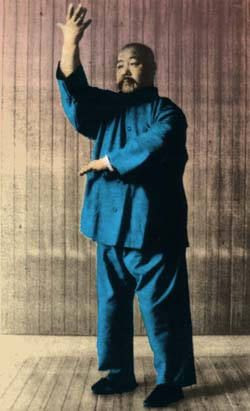
I think one of the main reasons for this is because, unlike other martial disciplines, they generally don't train or practice the individual technique(s) (which comprise their postures) at all. A “posture” is made up of several smaller movements (some of which seem rather insignificant), which are actually techniques. For instance, the posture of “single whip” in taijiquan is shown in one photo below. But there are actually a small series of movements that are performed when transitioning into that posture. These movements are actually individual techniques. This is especially true of baguazhang where the movement(s) that are employed when performing a given posture are made up of numerous individual techniques (and subsequently, applications).


And they aren't practiced individually. Ever. The forms are practiced quite assiduously, but not the individual techniques. So it's like learning something like karate or taekwondo and only practicing the forms while neglecting to train the individual techniques that make up the form!


Secondly, they rarely (if ever) practice applying their techniques in forms of one-step fight. When they do, the attacking partner simply “lobs” his attack out there with very little (if any) force or intent in it. And the aggressor is very compliant in his role. Real skill simply cannot be developed this way. At all.


I have always started my students out with first learning the postures and the individual movements that comprise them, Once those can be done correctly, students begin each class with many vigorous repetitions of them. Then they begin to learn how to apply them in one-step routines, against a variety of attacks and from three basic beginning positions; formal, fighting preparation, and normal.


In the formal method, the attacker draws back in preparation for his assault. The receiver takes up a position to prepare for meeting the attack. In the fighting preparation position (which is practiced only after a good level of skill has been acquired with the previous training routine), both participants begin from a “fighting stance.” When an adequate level of skill with this method has been achieved, they move to the “normal” position, which is just that...one or both participants begin from a normal standing posture.


At the beginning of each of the aforementioned routines, the attack is not necessarily very strong and the aggressor is relatively compliant. When the receiver has developed a good level of skill with that, the attack is made faster and stronger. The final stage is reached when the attacker fires out a full-blooded attack with strong intent. Thus, the receiver learns to respond to a real attack (however, he must be careful to control his counter-blows so as to avoid injuring his partner).


Third, neijia sylists never really engage in any form of freestyle sparring or freestyle one-step (as discussed in my book, Martial Maneuvers). This is critical. They must learn to move freely (according to the style they study) and execute the techniques/postures in an unrehearsed, freestyle manner. Until they can do this skillfully, they cannot truly depend on their arts for real self-defense.


Wednesday, February 1, 2023

TAKING THE CENTER

 by Phillip Starr

In the practice of some martial arts (particularly aikido and kendo), we hear about a concept often referred to as “taking the center.” To what does this expression refer? Let's take a closer look...

As you face your opponent, you have your own “space” and he has his. You feel, in a sense, that you own that space and can control anything that steps inside it (or you should be able to...). It's like a sphere that engulfs you from head to toe and as you move around, it moves with you; it's kind of like walking around inside a large ball. Anything that penetrates your “ball” is capable of striking you instantly and you'll likely not be able to react appropriately. The same is, of course, true for your opponent.


So you have yours and he has his. Between the two of you is a sort of “no man's land”, right? This is what we call the “mutual distance”, which moves and changes as the two of you move around (even if the “movement” is only mental). It can also be viewed as a sphere.


Whoever “takes control” of that center sphere controls the outcome of the conflict. Bear in mind that if you move forward, so the center sphere likewise moves in front of you. The same is true of your opponent. But the center sphere is not affected by physical movement only; it is also affected by mental “pressure” that is applied against, or through, it. Your “yi” (your will, determination, intention) can push up against it, much as if pressing against a large balloon.


And bear in mind the principle that tells us “where your yi goes, so does your qi (“ki” in Japanese, referring to vital energy) and shen (“shin” in Japanese, meaning spirit) go.” If you are thinking of yourself; your personal safety or the correctness of your stance or technique, your yi is withdrawn and not affecting the “middle/center sphere.” In fact, your “withdrawal” of qi tends to draw the center sphere towards you. If your opponent is well trained and experienced, he will be able to “feel” this and he'll know that your spirit is flagging; you're weak and unable to attack (and possibly unable to adequately defend yourself)! If he attacks quickly and powerfully, he can easily overwhelm you. Of course, if the situation is reversed, you can overwhelm him!


As you face him, even if only for a second, your yi (and consequently, your qi) must be POWERFULLY directed at him. This makes the center sphere expand and press against him (physically and mentally); you are “putting pressure” on him and he'll feel it. At the moment he shrinks back, you should attack forcefully. In kendo this is known as “seme” (攻め, “to attack...” and “gongme” in Chinese).


Whenever the opponent attacks you – even if it's something as basic as a grab – his yi (and qi) is directed (must be directed) towards you and, in the case of a grab, at the spot where he's applying the grab. As he advances, so the center sphere must move towards you and you should be able to feel this, especially if he attacks forcefully and/or with the intention of hurting you (remember, intention is yi and where his yi goes, his qi goes).


If your mind is focused on the spot where he is grabbing you or on the area that he is trying to strike, where is your yi? It is WITHDRAWN; your personal sphere is shrinking and you are in a weakened state! In this case, whoever is stronger, wins. So your yi should be directed elsewhere, preferably at the aggressor. As your yi extends, so does your qi. You remain strong and you are able to defend yourself.


And so it is with your daily practice of forms and even basic techniques. Never withdraw your yi. Keep it extended towards your foe. Consider these things when you practice...