TRADITIONAL MARTIAL ARTS

TRADITIONAL MARTIAL ARTS

Sunday, March 9, 2014

HARD vs. SOFT


      Is your style of karate or kung-fu considered a “hard style” or a “soft style?” Most Western practitioners of these disciplines are able to answer this question in a heartbeat. They may elaborate on the subject a bit, but they immediately understand the question and what it implies; “hard styles” rely on the development and application of brute, muscular force while “soft styles” emphasize relaxation, minimal muscular effort, and the utilization of qi (internal power). I remember when the terms “hard style” and “soft style” were first introduced to Western martial arts enthusiasts by the martial arts media back in the 1960's. I'd never heard of these phrases and I asked my teacher, Master W. C. Chen about them. I was astounded when I saw that he was every bit as confused as I was. These appellations have never been used in China or any other part of Asia. They were, as nearly as I can determine, created by the martial arts magazines of the day.
      Some karate and kung-fu enthusiasts elaborate a bit further and explain that “hard styles” utilize techniques that travel in straight lines and “soft styles” promote the use of circular techniques. I've never understood how anyone could accept this terribly flawed explanation and when would ask for some elaboration, the answers I received were almost comical. “We use straight punches”, they would say. I would counter this statement and remind them that the so-called “soft styles” utilize exactly the same type of forefist thrust. Moreover, this type of direct punch employs a (circular) turn of the hips as well as a (circular) screwing motion of the wrist just prior to contact.
      Not to be so easily dissuaded, they would argue that their kicks were directed along a straight path. They would happily demonstrate a front snap kick and a side thrust kick as proof of this. I countered easily and showed them that both kicks travel along arcs (as they must, since they are chambered from the height of the kicker's knee). I would also show them techniques such as sword-hand and backfist strikes, both of which travel along semi-circular paths.
      Even so, they would not be dissuaded. “Our blocking techniques are circular but our punches are straight”, they argued. I had to shrug my shoulders. There's no point in quibbling with a closed mind. Their convictions were based on remarks made in their favorite monthly martial arts publications, so there could be no doubt as to their validity, right?
      You bet.
      These were the same magazines that avowed that “soft styles” such as taijiquan and baguazhang didn't require the application of any muscular effort whatsoever. Many aspiring martial arts masters understood this to mean that any “98 lb. weakling” could easily become an expert at time travel by knocking his larger opponent into next week! The few taiji schools that were available were soon packed to the gills with students and the cash flowed quickly and easily. But the truth got lost in there somewhere.
      Some karateists prided themselves on practicing systems that were touted as being both hard and soft. Goju-ryu is a prime example. “Go” means “hard”, they would say. And “ju” means “soft.” So there you have it, right?
      No, not quite. Like the early practitioners of judo, who believed that the “ju” of judo meant “soft, gentle”, they didn't bother to learn something of the Japanese language and culture. The word “ju” does NOT mean “soft.” Not by a long shot. Rather, it refers to a type of pliability such as we might see with the flexible limbs of a young tree. Push against it and it gives way easily. It does not, however, collapse entirely. When you release it, the limb will snap back to it's original shape. This kind of elasticity is what “ju” refers to.
      All martial arts, from karate to kendo, aikido, kung-fu and kendo underscore the importance of doing more with less. That's a fancy way of saying that one shouldn't use any more (muscular) strength than is absolutely necessary. Ever. A highly skilled practitioner of karate, which is generally referred to as a “hard style”, will perform his techniques with celerity but without excessive brute force. I have trained and socialized with some of the finest karate masters of the last century such as Hidetaka Nishiyama and Seiyu Oyata. Their techniques were crisp and quick, delivered with minimal muscular effort. To the novice, such techniques would appear to be lacking any real destructive power but those senior practitioners who had had the dubious pleasure of being on the receiving end of those techniques knew better.
      At the same time, I have known a great many practitioners of taijiquan who prided themselves on their ability to push a foe some distance. The fact is that their pushing technique was seriously flawed and was more of what I call a”shove” rather than a “push.” And in any case, I've never known a push to end a serious conflict! Taijiquan, as well as baguazhang and xingyiquan (the three classical “sister” styles that are generally referred to as “soft” or “internal”) utilize a wide variety of punching, striking, and kicking techniques that, when applied correctly, are terrifically powerful. But if you're thinking of finding someone who can demonstrate such skill to you, you'd best plan to travel for a long, long time. Such skill nowadays in the “soft styles” is extremely rare, even in China.
      The terms “external style/school” (waijia) and “internal style/school” (neijia) are often used interchangably with “hard” and “soft”, respectively. Again, such phrases are rarely used in China. They were originally coined by a famous teacher of the neijia, Sun-Lutang, back in the 1930's. Some people argue that they actually refer to where a given style originated; those that originated outside of China were called “waijia” and those that were native to the Middle Kingdom (that's China for you rednecks) were referred to as “neijia.” Put simply, this argument is wrong.
      Sun wanted to differentiate between styles that rely on the development of “coiling power” (chansi-jin) and the manipulation of small, inconspicuous, internal tissues and those that focus solely on the use of the larger, overt muscle groups. Such a distinction does, in fact, exist. Most contemporary karate styles do not utilize coiling power at all. However, my research indicates that the early Okinawan forms of karate did. Over the generations, most of this information has been lost or forgotten. However, this would qualify such styles as forms of neijia! That statement probably won't help me win any martial arts popularity contests, but it's true.
So, hard or soft, internal or external, what counts is that you learn to perform your techniques and form correctly. Hard and soft eventually become one. And THAT is where real skill lies.
Sunday, February 16, 2014

DO WHAT YOU CANNOT DO


Do what you cannot possibly do.
Make the impossible possible.”
-Masutatsu Oyama
Founder of Kyokushin karate

      I first heard those words many, many years ago and I took them to heart. Martial arts were my great passion and they remain so to this day. I wanted to push the envelope; to see just how far I could go. I read about numerous masters of times past and determined that I would do what they'd done. After all, they weren't gods; they were men just like me. If they could do it, I could do it.
      Many of you are probably shaking your heads and thinking, “What a fool... That's a fine way to get hurt very badly. Or killed. You were certainly a very foolish young man.” And looking back on those days, I'd have to agree with you. But I wasn't stupid.
      I read about the legendary “arrow catch”, which is an extremely dangerous technique that involves catching an arrow in mid-flight. The legendary “godhand”, Master Masutatsu Oyama, said that of 1,000 students, only one or two would attempt to learn such a technique. And of the 1,000 who set out to perform it, only a couple who be successful. It kind of makes you wonder what happened to the 998 who failed, doesn't it? But I didn't consider that. I was never much good at math, anyway.
      I was still in college and young enough to think that I was invincible; that I could be one of the “one or two” who would succeed. “If they can do it, I can do it”, I thought. One of my students was a very skilled archer who owned a good recurved bow and he agreed to work with me, We spent months practicing together. Eventually, I would face him at the opposite end of a basketball court. An arrow-net was placed behind me to prevent arrows from striking the walls of the old college gym. Just as he released the arrow, I'd pivot and catch it.
      This isn't something that can be accomplished after only a couple of weeks of practice. I may have been foolhardy but I wasn't stupid. We started out by having me simply stand off to one side and observe how quickly the arrows passed by me. Then I would reach out and try to grab them. It was a slow and gradual process that required some considerable time. I would go on to demonstrate this technique at several demonstrations.
I also wanted to test myself by breaking large stones. Starting with very small ones, I eventually succeeded in cutting a 25 lb. stone with my sword-hand. My hand shook uncontrollably for three days but I was pleased that I had accomplished what I'd set out to do. I continued to train until I could shatter a “paver” brick (which is a little more than an inch thick) with my fingertips and split a coconut with a single blow.
      Now, I'm not bragging. I've never been one to indulge in self-aggrandizement. I've never had much time for people who do. The point of this short essay is simply this; although what I pushed myself to do was often very dangerous, it had a very profound impact on my mind and spirit. Martial arts isn't just about learning some exotic forms of kicking and punching; it's also about pushing yourself beyond what you perceive as your limits. It's about setting goals and then going beyond them. If you mindlessly practice a few punches and kicks once or twice a week, you're not really practicing martial arts; you're dancing. Without proper spirit, martial arts devolve into little more than some nifty-looking calisthenics.
       Certainly, I'm not suggesting that you run to the nearest sporting goods store and purchase a good bow and a handful of arrows or drive through the countryside until you can find a 20 lb. stone. After all, techniques such as the arrow-catch are fraught with danger and anyone who aspires to do them must train very carefully and gradually. You must push yourself slowly, step by step. Remember that when I trained to perform these things I was young, in excellent physical condition (I suppose my mental condition could be called questionable), and I had practiced martial arts for a very long time.
      What I'm suggesting is that you strive to push yourself past your “limits.” After all, it's YOU who set those limits in the first place! It's going to take some considerable work and sweat to get to the very edge of your limits... and then it'll require more than just sweat to go beyond them; it's going to take time, guts, and belief in yourself.

Wednesday, February 12, 2014

THE TRAINING UNIFORM


      Many traditional martial arts require that students wear a special practice uniform. The names for these numerous forms of apparel often vary from one discipline to another but there are certain common elements that are found in all of them:

  • They tend to be what we refer to as “rather baggy” and “loose fitting.” Stylish looks means nothing in a training hall where efficiency is the key word. Clothing that is tight or restrictive is not particularly conducive to quick, smooth movements.

  • They are devoid of items that may result in injury to one's training partner or oneself. Zippers, snaps, and hard buttons are not to be found on traditional martial arts uniforms. And anyway, zippers and snaps simply didn't exist at the time these uniforms came into existence. In fact, several types of traditional uniforms are versions of ancient streetwear.

  • They are usually made of fairly rugged material that will stand up to rigorous physical training. This especially true of the grappling arts.

  • Students are expected to keep their training uniforms clean and in good repair at all times.


      In other articles I have written about the evolution of various training uniforms; in this chapter I'd like to discuss why I feel that wearing the proper uniform is an important part of your martial arts practice.
      As a lifelong practitioner of the Chinese martial arts, let me begin by admitting that except for the grappling art of shuai-jiao, there is no such thing as a standardized kung-fu uniform. I currently reside in southern China and martial arts enthusiasts generally wear the same attire that they have always worn for martial arts practice; their street clothes!       
     Some wear what are referred to as “Tang clothes” (so named because they were popular during the Tang Dynasty) but by and large, they wear sports shirts or t-shirts and everyday trousers. Nothing special.
      Consequently, many Western kung-fu schools disdain the wearing of any kind of formal training attire. I think this is a serious mistake that adversely affects their training. Participants dress casually and, because how we dress affects how we behave, they tend to approach their training in a rather casual manner. This isn't particularly contributive to the development of a strong (martial) spirit or maintaining a well-disciplined class.
      Moreover, street attire was never intended to hold up to the rigors of a spirited martial arts class. Shirts and trouser are easily torn and ruined and their buttons, snaps, and zippers can easily result in injuries to both participants. So, instructors are left with one of two choices; they can either conduct a proper class and watch as their student's clothes are gradually reduced to shredded scraps, or they can tone down the training and ensure that their students (and their wallets) remain happy.  The latter is almost always the choice that is selected.                  
      Training uniforms were developed over many years because the martial arts practitioners of times past understood that ordinary street clothes were simply not suitable for training. Also, a consideration that is often overlooked is the fact that in most martial arts schools, all training uniforms look the same...or very nearly so. This is a policy that is often strictly enforced. Students must understand that they are all equal and they are all “related”, as it were. They are members of a martial arts “family.” Thus, they all wear the same uniforms.
The training uniform gives the new student the feeling of authenticity; a feeling of, “Now I'm really doing it!” He becomes enthusiastic about training. This is exactly why many martial arts schools include a uniform with a new student's first tuition payment. It has a considerable impact on the student's attitude about his training and his place in the school.
      It is for this same reason that I tell my students to wear their uniforms when they practice at home. Putting on the uniform reminds them that they are “really doing it” and they are less likely to slack off or cut their training period short when they get a little winded. They try just a little harder because of that special uniform. However, sometimes they are unable to wear the full uniform. I tell them that in such cases, they should at least wear the trousers. And it helps. Training without the uniform just isn't the same.

Saturday, February 8, 2014

DON'T THROW THAT PUNCH! HAND ME THE SCREWDRIVER!


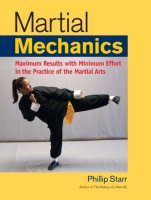
      MARTIAL MECHANICS was my second book. I'd always wanted to write a book like this; explain the principles of physics and kinesiology as they apply to martial arts technique and movement. It was great fun to write! I decided that I'd write in the same that I'd actually teach (well, except for some of the expletives) because I'm tired of the usual sterile approach that reads like a math textbook. That's about as interesting as watching paint dry on a storm fence.
My editor didn't appreciate some of the humor -like the line about squeezing the anal sphincter when you execute certain movements, where I told the reader to imagine training in a prison shower... that line was unceremoniously removed. :-) I had to argue with copy editors about leaving in a lot of the humor. They said no one would know what a “klick” is...I told them not to worry. Most people would understand. If they didn't, they could bloody well ask a friend.
      I'd taught these principles so many times that the words came easily. The photo sessions were tough, though. I learned a lot about what editors like in terms of photos for a book and we had to do many re-shoots. It was really a LOT of work!
      When the book came out, we had a few – very few - people (mostly high school teachers) whine that the physics were faulted. I contacted a couple and asked exactly what they meant. One argued that the words “power” and “force” as I'd used them, were incorrect in terms of classical physics. I reminded him that I was aware of that but I was writing for people who'd probably never studied classical physics...not for a class of science students! That settled the matter. Another critic (in the UK, on Amazon in the UK) didn't like my use of “American humor.” I figured he needed a laughter enema.
      On the whole, the book was very well received and many people wrote to me about how the book had actually changed the way that they practiced their martial arts. I was very happy to hear that my efforts had helped them. I'd perused a couple of other books on the subject (I won't mention their names here); one was fair but incomplete and the other was seriously flawed. I wanted mine to be as accurate as possible. To describe some of the body actions was trickier than I'd anticipated.
All in all, the book has done very well. My thanks to everyone who purchased a copy. I hope it's been of help to you in understanding how to improve your technique!

Wednesday, February 5, 2014

Seven Years For The Foundation


     Last April marked my 57th year in the martial arts. I recall looking through a copy of my first book, The Making Of A Butterfly, and thinking back to my early days of training under Master W. Chen.  I remembered something he'd said that made me wonder if I would be able to continue training in the Chinese martial arts.
     I was in the throes of a religious experience. That is, I thought I was seeing God! I was doing my best to hold the "ma" (commonly known as "ma-bu", but more correctly called "qi ma-bu", or "horse-riding stance"). My legs were on fire and shaking like a jackhammer. I could hardly keep my back straight and breathe correctly. I collapsed, of course, but I resolved to get right back up and continue the exercise. And within a few seconds my legs gave way again.
     Sifu Chen stopped me and told me about the vital importance of learning the "ma", of building a solid foundation. He told me that the first seven years of training were devoted to this end.
SEVEN YEARS???
     Yep. He said it calmly, as if it was a fact that everybody knew and accepted. I couldn't imagine continuing this kind of training for seven years! But that's what he meant and that's exactly what I ended up doing.
     Oh sure, I was taught many other things during that time. I learned all kinds of techniques and forms and two-person exercises and joint techniques and throws and...lots of stuff. But the emphasis on the ma was always there. I can't count the number of times that I listened to lectures about the importance of it.
     I figured that if it was important enough for my sifu to constantly lecture us about it, it was something I'd better practice. A lot. And I did. Eventually, I came to understand its value. This isn't something that can be completely understood just by reading or thinking about it. It has to be practiced, physically experienced over an extended period of time. That's the only way to "get it", to acquire the knowledge and ability that comes as a result of such painful practice.
     The reason I thought about it was because my editor had sent me a copy of a little blurb they were putting on the back cover of my book. It's a quote from the book about learning the "ma." I thought about how long it had been since I'd first started training and then noticed another line they'd put on the cover...that I'd been training for over 50 years (at the time the manuscript was sent in, it was only 48 1/2 years) and I was stunned. I guess time flies when you're having fun.
     But even after five decades of practice (part of which passed before I met Sifu Chen), I have to say that he was absolutely right. Without a proper foundation, learning real martial arts is impossible.
     Building a strong "ma" doesn't necessarily mean that you only practice standing in a horse-riding stance for a certain length of time each day; it also has to do with learning how to step, how to shift your weight and move, how to stand in other stances (although the "ma" is the mother of all stances), how your breathing affects your movement, how your yi (intention) affects your movement, how to maintain balance when standing still and moving...lots of things. But they all have to do with the foundation. The "ma."
     I remember back when beginning judo students were made to spend most of their practice time learning not only ukemi (breakfalls), but the basic stance (jigotai). It's kind of a second cousin to the "ma." Students practiced shifting and stepping in this position. Times have changed; I don't think most modern judoists have ever in so much as even heard of this posture.
     There's no question that the vast majority of contemporary kung-fu (and karate) practitioners have ever practiced the "ma." They may know what it is but they don't "have" it. They can intellectualize about it but they have no real foundation.
     Sometimes I hear internal stylists argue that they don't use the horse-riding stance very much, if at all. That's fine. "Ma" literally means "horse" (as well as other things), but the term "ma" when it's use in conjunction with fundamental stance(s) simply refers to the style's most basic way of standing. In xingyiquan, baguazhang, the basic stance is "sanzai" (aka. "san tsai"). That's their "ma." In taijiquan - well, it depends on who you talk to...some would say they do have a horse-riding stance (it appears in the posture known as Commencement) while others use the "sanzai" stance. Whatever. The point is that they do have a single, fundamental stance.
     The problem is that most martial arts enthusiasts nowadays don't practice their "ma" anymore. In many cases their teachers don't (and probably never have), either. The teacher is sometimes afraid that if he makes students engage in such uncomfortable training, they'll quit - and that means loss of income. So they don't make students do it anymore. And now we're seeing the results - martial arts practitioners who have no real power, no real skill. No "ma."
     I remember that my sifu used to insist that if we stood in the "ma" every day, our vital energy (qi) would eventually sink down to the dantien and we would be able to express great power. I couldn't imagine how this was possible. How could standing in this painful position accomplish that?
     And he said that unless we built a solid "ma" we'd never be able to emit real power. We'd have no true strength. That confused me, too. But he was absolutely right. And after watching the development of martial arts over the last fifty years, I must say that this old time-tested training method needs to be re-emphasized.
     Practicing the "ma" has a positive impact on both physical and mental health, too. Many years ago, kung-fu teachers in China would often recommend it as a sort of therapy for a variety of ailments, especially for problems with the stomach and intestines. It was prescribed for some respiratory sicknesses, too.
It's also an excellent tool for developing a strong yi (intention) and spirit. Try standing in it for ten or fifteen minutes and you'll understand why.
     Most students loathe this kind of training. They want to jump right into the martial arts and get into the "meat" of it. They fail to see how standing in some static posture or doing boring drills like "walking the square horse" are going to help them become superior fighters.
     But they do. It just takes time. You can't hurry the process. You have to learn patience, you have to willing to endure great discomfort, and you have to develop an iron will.
     For seven years.

Monday, January 27, 2014

KAMAE


      All martial disciplines feature various forms of kamae, which are physical postures that practitioners assume just prior to engaging an opponent. Most of them are proactive; designed to provide a measure of protection against an assailant's attack. In this wise, they may be compared to a shield. However, the proper kamae should also bring many of the practitioner's bodily weapons to the fore. Thus, he is prepared to defend himself and deliver a quick counter-attack.
      The traditional martial disciplines wherein the warrior was armed with some kind of weapon often featured “openings”, apparent flaws in the postures that could be exploited by the enemy. However, these gaps were intentional; they were actually traps that were meant to ensnare an unsuspecting foe. The warrior meant to tempt his opponent into trying to take advantage of his supposed weakness. Naturally, the opening had to be rather small; if it was too obvious, his adversary would see the flaw for what it was.
      Using this type of tactic could provide the feudal warrior with a real advantage. He would know from what quarter his enemy's attack would come and he'd be prepared to deal with it instantaneously. He wanted to induce his opponent to attack a target that wasn't really there.
It's interesting to note that the bare-handed martial forms didn't utilize any kind of formal pre-combat kamae. Early films of karate instructors (many of whom would go on to become some of the most famous teachers in the world) show them engaged in jyu-kumite (freestyle sparring), which, as you'll recall, was a new innovation at that time. There is no distinctive placement of the arms and hands.
      As time marched on and more karate enthusiasts began to participate in this new-fangled exercise known as jyu-kumite, well-defined kamae began to emerge. Not unexpectedly, they initially often resembled a type of kamae used in classical kenjutsu (swordsmanship). Their interest was in winning the match. They wanted to score points against the opponent while preventing him from doing the same thing to them.
      With the advent of karate tournaments in the West, the kamae underwent further modifications, especially after the introduction of padded gloves and footgear. Fighters assumed the kamae that one would expect of a Western boxer, whose hands are employed to protect his face and head (thus preventing a knockout) whilst his arms and elbows are used to protect his torso. Because striking below the belt and kicking into the groin and legs are not permitted, there is no need to concern oneself with their protection.
      The differences between the classical forms of kamae and the more contemporary versions may not seem glaringly obvious but a little introspection will reveal the truth. The feudal warrior's primary concern was the destruction of his enemy and the preservation of his clan. Self-defense was of secondary importance. His approach to combat was aggressive; his intention was to draw his enemy into a trap and utterly destroy him.
      After the disappearance of the feudal systems, the emphasis shifted to a more personal level, that of self-protection and defense. And when competition walked onto the scene, winning the game became the first priority.
      In so far as actual self-defense is concerned, you usually don't have time to adopt some kind of formal kamae. Things often happen to quickly for that. It's best to utilize the principles of the formal kamae in common, everyday postures. These are often referred to as shizentai (natural postures). After all, it's from these positions that you may have to move quickly and defend yourself. It sounds simple enough to do but it will actually require some considerable practice. This is why the founder of aikido, Morihei Uyeshiba, said, "Kamae is for beginners. Shizentai is for advanced pupils."

Tuesday, January 21, 2014

THE COCOON


      In 2005, I decided to try my hand at professional writing. Once of my students, Dennis Mace, had told me that he and many of his classmates enjoyed essays I'd written about my teacher, my classmates, and myself. So, my busy little fingers went to work on my keyboard and I began to write. And edit. And write. And edit...
      I was living in Unionville, Iowa at this time. For those of you who are unfamiliar with this place (and why on earth would you be?), it is a village of about 100 people, including dogs, babies, and chickens. It features only two real streets – Front Street and Back Street – and most of its inhabitants make their livings by working at local factories, digging in the ground, or both. And one of them aspired to be a writer.
      I had relocated there from Omaha, Nebraska, where I had run a martial arts school for many years. I thought that Unionville would be a fine place to raise my children. I had lived in both Fairfield and Ottumwa (cities in southeast Iowa) and I knew the area very well. My wife at the time was originally from Unionville.
      I had started teaching a small kung-fu class in the nearby town of Centerville and I had worked for the Wapello County Sheriff's Department.
      I was told that writing my book was a waste of time. Thousands of aspiring authors send in their manuscripts to various publishers every day; how could I possibly hope to have my book published? The odds were stacked against me. “Stop wasting your time”, the critics said. “You'll only be very disappointed in the end.”
      But I wasn't about to throw in the towel. No. Way.
      After I'd about finished the manuscript, I reasoned that I needed to find a literary agent to help me find my way through the quagmire of the publishing industry and I was very excited to find such a man. A 6th grade black belt in Kenpo, John (not his real name) had put up a shingle as a literary agent and he was familiar with several publishing houses that specialized in martial arts books.
      John was a great help to me and taught me a great deal about professional writing. He liked my manuscript and sent sample copies to several publishers. I waited with bated breath for their replies... but none were forthcoming. The weeks passed slowly. One promising editor who worked for North Atlantic Books was mildly interested but just as my hopes had begun to rise, John called to say that the editor had gone to work for another publisher. “It happens a lot with editors”, he said.
      Then, just when I'd about given up hope, John quit working as a literary agent. “It just doesn't bring in the money fast enough”, he said. So there I was...no agent, no publisher interested in my work. But I wouldn't give up. Nope. BUT...I was dead in the water.
      A couple of days later I had to drive into Centerville to buy a few groceries. My head had been spinning, trying to think of solutions to the problem of getting my book published but no answers were forthcoming. So, like most people do when they've tried everything else first, I prayed. I've always liked to think that the Almighty and I have developed a very close, personal relationship, especially after the tragic death of my youngest son, Christopher. In fact, you could say we're on a first-name basis; He calls me whatever He wants and I call him “Almighty God.”
      I prayed aloud and told our God that I really needed some encouragement. If writing was something that He intended for me to do, I needed a sign. And since I'm not much good at picking up subtle signals, I asked that the sign be reasonably clear.
On my way home I was still thinking about possible solutions to my problem. I'd all but forgotten about my prayer. I arrived home, carried the groceries inside the house and skipped back out the door to get the day's mail. And there...there it was. His sign!
      I saw a letter from the Tuttle Publishing Company. Tuttle is one of the largest publishing houses in the U.S. and they specialize in titles having to do with various aspects of Eastern life and thought. Any martial arts writer worth his salt would give his eye teeth to be published by such a renowned firm!
      I tore the letter open and anxiously read the brief letter that had been written by one of the main editors. They were interested in my book! They wanted to see the full manuscript!!! And I looked up and thanked God for the “not so subtle” sign... Yes, He wanted me to write. That was clear.
      Days passed and turned into weeks but there was no word from Tuttle. I didn't understand this. If God wanted me to write, why wasn't anything happening? I was confused and very tired. I had spun a very strong cocoon for myself and I stayed deep inside it.
      The telephone rang while I was watching television one evening. I answered and a voice asked, “Is this Phillip Starr?”
      Now, insurance salesmen are about the only people who call me by my real first name and I generally dislike having to deal with them and their sales pitches. Even so, I replied, “Yes, it is.”
Mr. Starr, my name is Richard Grossinger. I'm the owner of North Atlantic Books and I was just cleaning out a few things from the office of our former martial arts editor, Mr. Sykes.”
My heart was beginning to skip beats... God has certainly not forgotten me!
      “And I found a post-a-note taped to a manuscript that you had written. I assumed the telephone number on the note was yours. I read the manuscript and...well, I'd like to publish your book.”
      My heart came to a dead stop. I was light headed, almost giddy with joy. “Uh...Yes!!! Yes, that would be wonderful”, I replied in a sudden moment of clarity.
      And the rest is history. “The Making Of A Butterfly” would be published in 2006 and followed, at the time of this writing, by four more titles (with more being generated). Oddly enough, the name of the book and the saying that was first penned by Richard Bach, which I inserted into one of the first pages of the book (from his novel, “Jonathan Livingston Seagull”(...if you've never read it, get a copy today!) was most appropriate to my entrance into the world of professional writing...

What the caterpillar sees as the end of the world,
the Master sees as a butterfly.”

      I had broken free of my cocoon and opened my wings.